Pourmokhtaris uppmaning: Läs mer än IPCC-rubriker
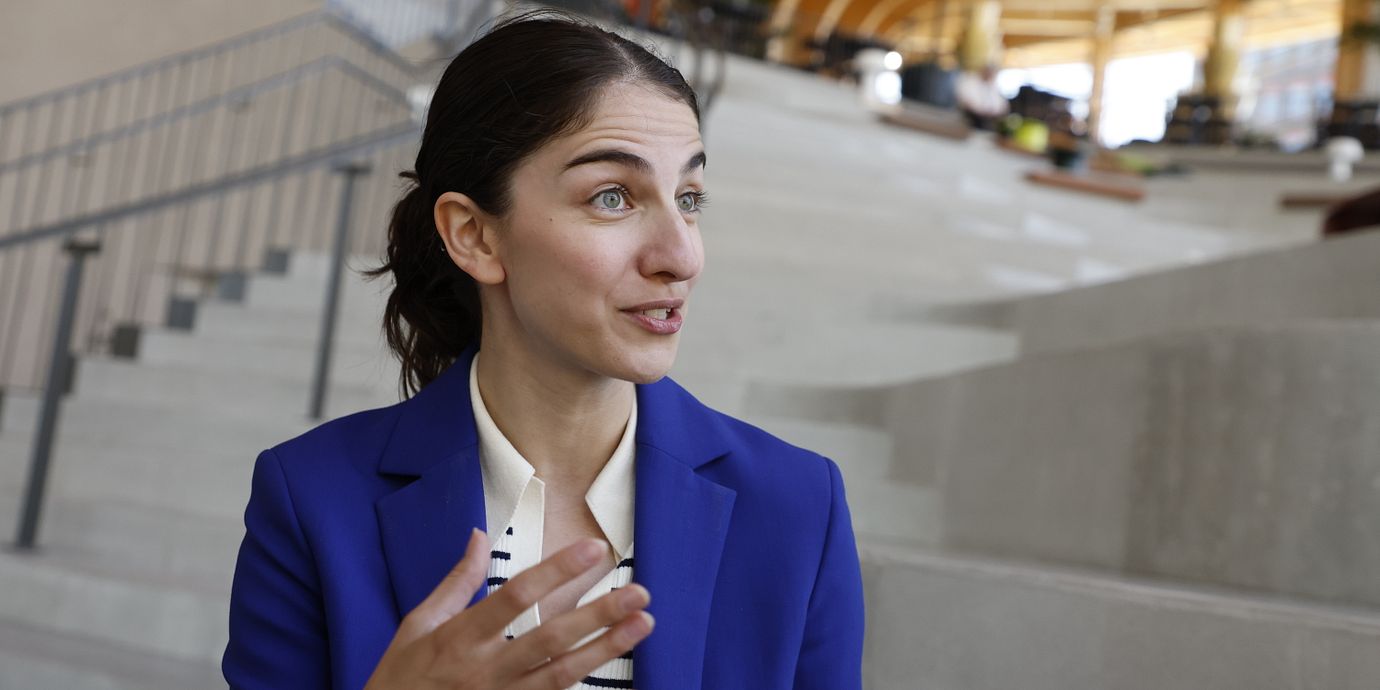
Regeringen vill storsatsa på koldioxidinfångning. Tekniken har potential att hjälpa Sverige att nå 2045-målet, säger klimatminister Romina Pourmokhtari (L) till DN.
Kritiker menar att fokus på infångning tar resurser från åtgärder som kan få påverkan här och nu. Men många i debatten som ”älskar att prata om IPCC när de pekar ut hur dystert” läget är borde lusläsa FN-rapporterna, tycker hon.
– Om de läste lite mer än rubrikerna i rapporterna hade de sett att det är väldigt svårt att klara 1,5-gradersmålet utan utbyggd kärnkraft och just koldioxidinfångning.
Tidigare
bakgrund
Koldioxidinfångning
Wikipedia (en)
Carbon capture and storage (CCS) is a process in which a relatively pure stream of carbon dioxide (CO2) from industrial sources is separated, treated and transported to a long-term storage location.: 2221 For example, the burning of fossil fuels or biomass results in a stream of CO2 that could be captured and stored by CCS. Usually the CO2 is captured from large point sources, such as a chemical plant or a bioenergy plant, and then stored in a suitable geological formation. The aim is to reduce greenhouse gas emissions and thus mitigate climate change. For example, CCS retrofits for existing power plants can be one of the ways to limit emissions from the electricity sector and meet the Paris Agreement goals.: 16
Carbon dioxide can be captured directly from the gaseous emissions of an industrial source, for example from a cement factory (cement kiln). Several technologies are in use: adsorption, chemical looping, membrane gas separation or gas hydration. However, as of 2022, only about one thousandth of global CO2 emissions are captured by CCS, and most of those CCS projects are for natural-gas processing.: 32 CCS projects generally aim for 90% capture efficiency, but most of the current installations have failed to meet that goal.
Storage of the captured CO2 is either in deep geological formations or in the form of mineral carbonates. Geological formations are currently the favored option for storage. Pyrogenic carbon capture and storage (PyCCS) is another option. Long-term predictions about submarine or underground storage security are difficult. There is still the risk that some CO2 might leak into the atmosphere. A 2018 evaluation estimates the risk of substantial leakage to be fairly low.
CCS is so far still a relatively expensive process. Carbon capture becomes more economically viable when the carbon price is high, which is the case in much of Europe. Another option is to combine CCS with a utilization process where the captured CO2 is used to produce high-value chemicals to offset the high costs of capture operations.
Some environmental activists and politicians have criticized CCS as a false solution to the climate crisis. They cite the role of the fossil fuel industry in origins of the technology and in lobbying for CCS focused legislation. Critics also argue that CCS is only a justification for indefinite fossil fuel usage and equate to further investments into the environmental and social harms related to the fossil fuel industry. With regards to public support, communities who have been negatively affected by an industrial activity in the past are less supportive of CCS. Communities that feel inadequately informed about or excluded from project decision-making may also resist CCS development.
Globally, a number of laws and rules have been issued that either support or mandate the implementation of CCS. In the US, the 2021 Infrastructure Investment and Jobs Act provides support for a variety of CCS projects, and the Inflation Reduction Act of 2022 updates tax credit law to encourage the use of CCS. Other countries are also developing programs to support CCS technologies, including Canada, Denmark, China, and the UK.
Omni är politiskt obundna och oberoende. Vi strävar efter att ge fler perspektiv på nyheterna. Har du frågor eller synpunkter kring vår rapportering? Kontakta redaktionen