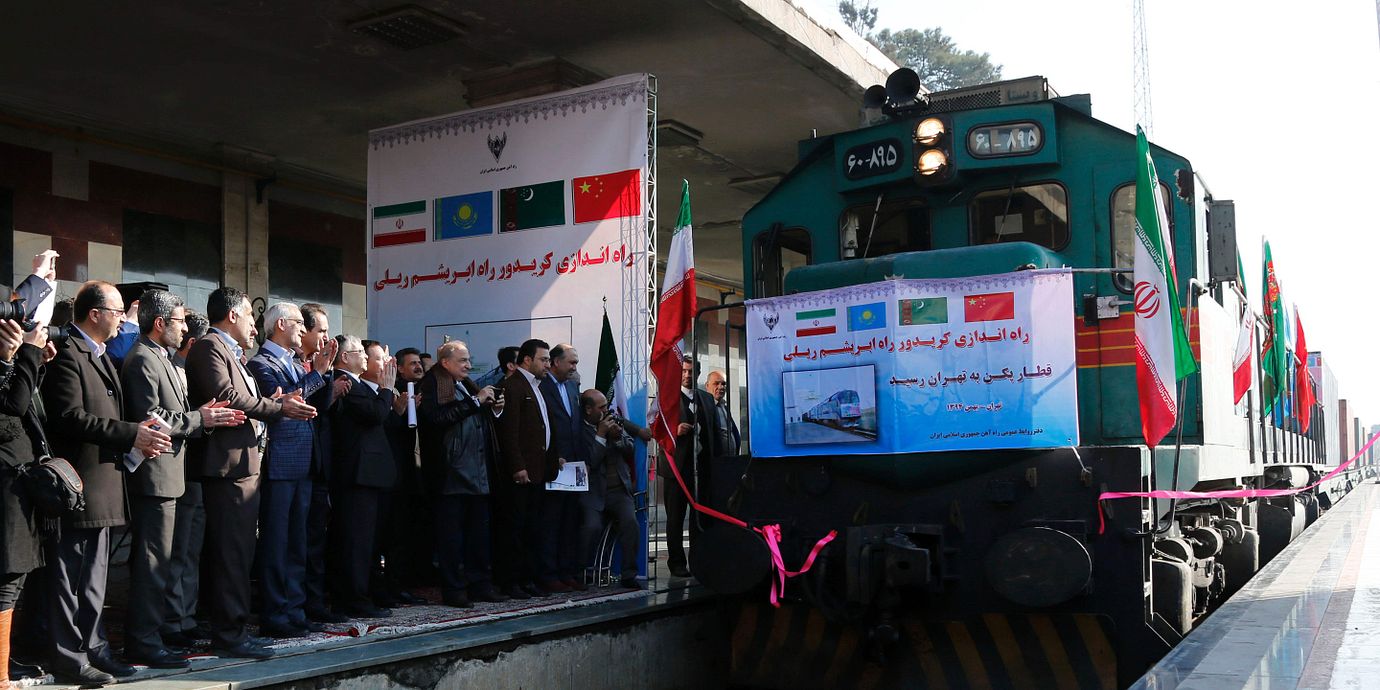
Silkesvägen har fått nytt liv mellan Kina och Iran
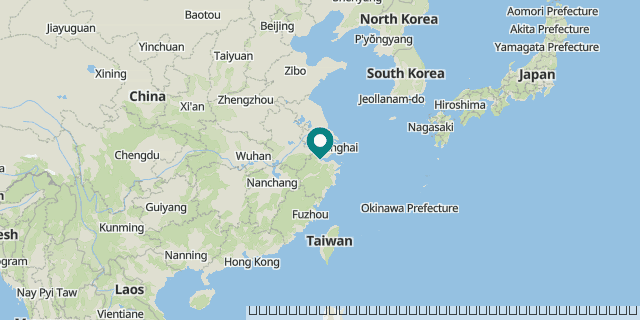
En 14 dagar lång resa avslutades under måndagen när ett frakttåg anlände i Tehran, Iran, från den östliga kinesiska provinsen Zhejiang, skriver The Guardian. Att återupprätta den uråldriga handelsrutten ”silkesvägen”, som förband Asien med Mellanöstern och Europa, är en del av en kinesisk strategi för ekonomisk utveckling som går under namnet “One Belt, One Road”.
bakgrund
One Belt, One Road
Wikipedia (en)
The Silk Road Economic Belt and the 21st-century Maritime Silk Road, also known as The Belt and Road (abbreviated B&R), One Belt, One Road (abbreviated OBOR) or the Belt and Road Initiative is a development strategy and framework, proposed by People's Republic of China that focuses on connectivity and cooperation among countries primarily in Eurasia, which consists of two main components, the land-based "Silk Road Economic Belt" (SREB) and oceangoing "Maritime Silk Road" (MSR). The strategy underlines China's push to take a bigger role in global affairs, and its need to export China's production capacity in areas of overproduction such as steel manufacturing.
It was unveiled by Chinese paramount leader Xi Jinping in September and October 2013 in announcements revealing the SREB and MSR, respectively. Also, it was promoted by Premier Li Keqiang during the State visit in Asia and Europe.
bakgrund
Silkesvägen
Wikipedia (en)
The Silk Road or Silk Route is an ancient network of trade routes that were central to cultural interaction through regions of the Asian continent connecting the West and East from China to the Mediterranean Sea.
The Silk Road derives its name from the lucrative trade in Chinese silk carried out along its length, beginning during the Han dynasty (207 BCE – 220 CE). The Central Asian sections of the trade routes were expanded around 114 BCE by the Han dynasty, largely through the missions and explorations of Chinese imperial envoy, Zhang Qian. The Chinese took great interest in the safety of their trade products and extended the Great Wall of China to ensure the protection of the trade route.
Trade on the Silk Road was a significant factor in the development of the civilizations of China, the Indian subcontinent, Persia, Europe, the Horn of Africa and Arabia, opening long-distance, political and economic relations between the civilizations. Though silk was certainly the major trade item from China, many other goods were traded, and religions, syncretic philosophies, and various technologies, as well as diseases, also travelled along the Silk Routes. In addition to economic trade, the Silk Road served as a means of carrying out cultural trade among the civilizations along its network.
The main traders during antiquity were the Chinese, Persians, Somalis, Greeks, Syrians, Romans, Armenians, Indians, and Bactrians, and from the 5th to the 8th century the Sogdians. Following the emergence of Islam, Arab traders became prominent.
In June 2014 UNESCO designated the Chang'an-Tianshan corridor of the Silk Road as a World Heritage Site.
Zhejiang
Omni är politiskt obundna och oberoende. Vi strävar efter att ge fler perspektiv på nyheterna. Har du frågor eller synpunkter kring vår rapportering? Kontakta redaktionen