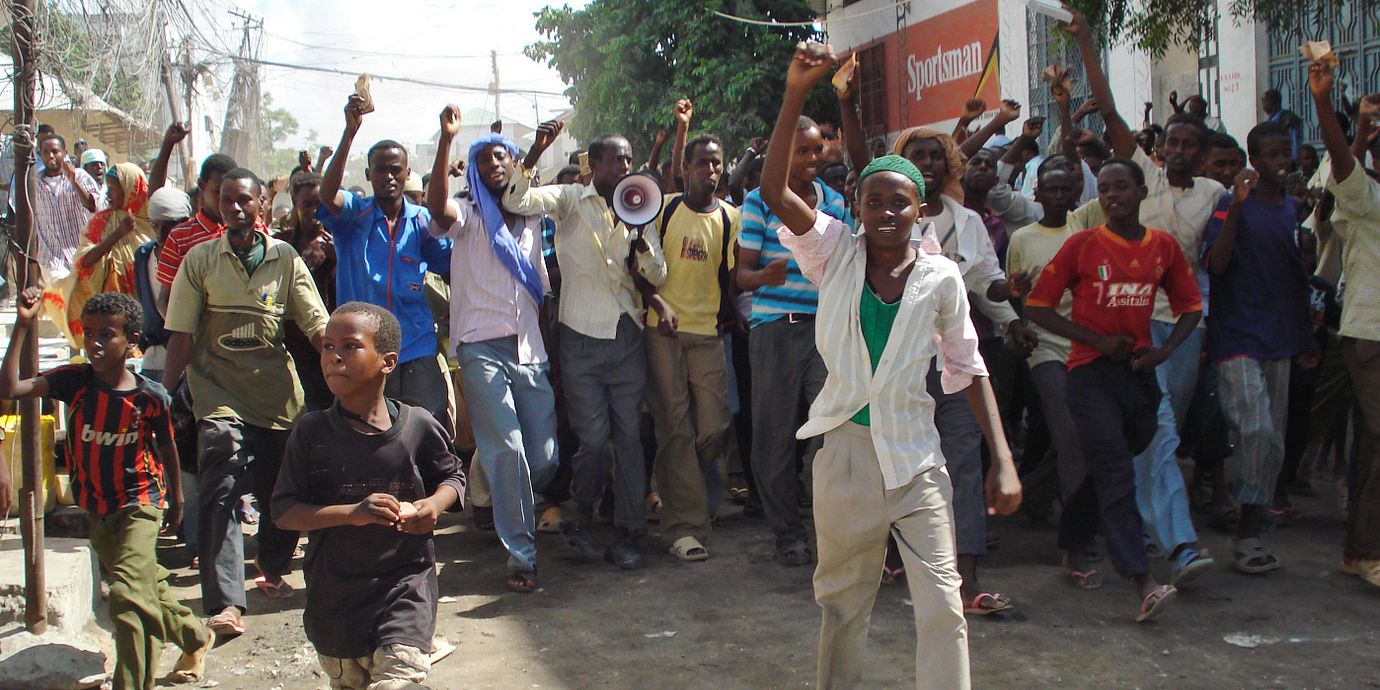
Somalier demonstrerar mot höga matpriser, ett av flera upplopp under matpriskrisen 2007–2008. (MOHAMED SHEIKH NOR / TT / NTB Scanpix)

Lägsta tillgången på vete sedan finanskrisåren

Efter extremsommaren räknar experterna med att tillgången på vete på världsmarknaden kommer att minska till den lägsta nivån sedan 2007–2008, skriver Reuters. Det trots att mängden vete som lagerhålls väntas slå rekord när marknadssäsongen 2018/2019 inleds.

När skördarna går under klubban spår analytiker att det kommer att finnas 273 miljoner ton vete på lager. Men omkring hälften av den rekordstora mängden finns i Kina – och landet väntas inte släppa ut någon del av den på världsmarknaden.

Förra gången tillgången på vete var lika låg som den nu väntas bli utlöste det hungersupplopp i Afrika och Asien. Det finns dock saker som talar för att det kommer att gå lugnare till den här gången. Inte minst har flera nordafrikanska länder minskat sitt beroende av import.

– Vi vill inte vara alarmistiska när det gäller konsekvenserna, säger Abdolreza Abbassian, chefsekonom för FN:s mat- och jordbruksorgan FAO.

bakgrund
 
Matpriskrisen 2007–2008
Wikipedia (en)
World food prices increased dramatically in 2007 and the first and second quarter of 2008, creating a global crisis and causing political and economic instability and social unrest in both poor and developed nations. Although the media spotlight focused on the riots that ensued in the face of high prices, the ongoing crisis of food insecurity had been years in the making. Systemic causes for the worldwide increases in food prices continue to be the subject of debate. After peaking in the second quarter of 2008, prices fell dramatically during the late-2000s recession but increased during late 2009 and 2010, reaching new heights in 2011 and 2012 (see 2010–12 world food price crisis) at a level slightly higher than the level reached in 2008. Over the next years, prices fell, reaching a low in March 2016 with the deflated FAO food price index close to pre-crisis level of 2006. Since then prices have been increasing, but as of 2017-05 they have not reached crisis levels again. The initial causes of the late-2006 price spikes included droughts in grain-producing nations and rising oil prices. Oil price increases also caused general escalations in the costs of fertilizers, food transportation, and industrial agriculture. Root causes may be the increasing use of biofuels in developed countries (see also food vs fuel), and an increasing demand for a more varied diet across the expanding middle-class populations of Asia. The Food and Agriculture Organization also raised concerns about the role of hedge funds speculating on prices leading to major shifts in prices. These factors, coupled with falling world-food stockpiles, all contributed to the worldwide rise in food prices.
Omni är politiskt obundna och oberoende. Vi strävar efter att ge fler perspektiv på nyheterna. Har du frågor eller synpunkter kring vår rapportering? Kontakta redaktionen