Energiministern skeptisk till SMR-reaktorer
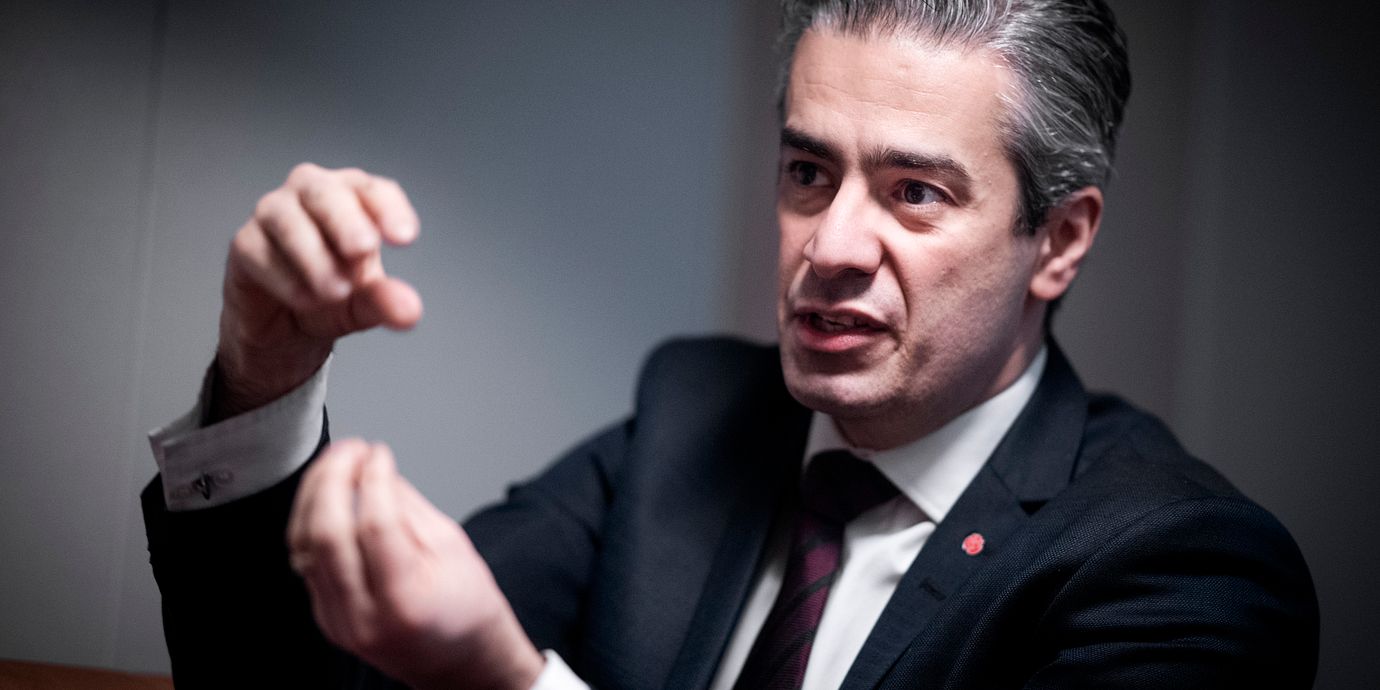
Vattenfall följer utvecklingen av de mindre kärnkraftsreaktorerna, SMR, och bolagets strategichef sa nyligen att han är hoppfull kring tekniken. Energiminister Khashayar Farmanbar (S) är mer skeptisk och liknar projektet med de alltjämt hypotetiska fusionskraftverken, i en intervju med DI.
– Jag vill inte låsa upp svensk energisystems framtid på något som kanske är tio till femton år bort för evigt, säger han.
bakgrund
Fusionsenergi
Wikipedia (sv)
Fusionsenergi (vardagligt vätekraft) är energi som frigörs vid sammanslagning av lätta atomer. Energiproduktionen i solen och andra huvudseriestjärnor bygger på fusion. Fusionskraftverk är en hypotetisk framtida form av kärnkraftverk, som skulle använda fusionsenergi.
Fördelen med fusionskraftverk framför traditionella kärnkraftverk vore att processen inte behöver lämna efter sig lika starkt radioaktiva ämnen som vid fission. Problemet med fusion är att extremt höga temperaturer måste kunna kontrolleras, vilket inte lyckas med dagens teknik.
Istället för att klyva tunga kärnor (fission) kan energi frigöras genom fusion (sammanslagning) av lätta atomkärnor med processer som är besläktade med energiproduktionen i solen och andra huvudseriestjärnor. Inga sådana kraftverk finns ännu i kommersiell drift men det pågår forsknings- och utvecklingsarbete eftersom de potentiella fördelarna är mycket stora. Mest har man intresserat sig för följande reaktion:
D + T → 4He + n + 5.2 x 10⁻¹³JStörre delen av den frigjorda energin utgörs av kinetisk energi hos den neutron som frigörs.
Ett sätt att åstadkomma den här fusionen av deuterium och tritium är att upphetta atomerna till extremt hög temperatur (över 100 miljoner grader) och högt tryck (8 atm). Eftersom inga material tål sådana temperaturer försöker man stänga inne den upphettade plasman i ett magnetfält inuti ett torusformad tank. Det kan vara en tokamak eller en stellarator. Än så länge klarar man bara detta under mycket kort tid. Neutronerna är opåverkade av magnetfältet och träffar tankens väggar som är täckt av en filt (en. blanket) som tar upp energin och där värmen förs bort med lämpligt kylmedium, till exempel vattenånga eller en gas som helium. En annan metod är tröghetsinnesluten fusion, att utsätta små kapslar med deuterium och tritium för intensiva laser-, röntgen- eller partikelpulser varvid fusionsprocesser kan starta.
Hittills har det också krävts tillförsel av mer energi för att köra processen än vad man kunnat utvinna ur den. Ett kommersiellt utnyttjande av fusionskraften ligger i bästa fall troligen mellan 30 och 50 år in i framtiden.
Risken för katastrofala olyckor liknande exempelvis Tjernobylolyckan är obefintlig eftersom mängden bränsle i reaktorn är väldigt liten jämfört med ett konventionellt kärnkraftverk. Man räknar med att ingen som befinner sig utanför en fusionsanläggning kan behöva bli utsatt för strålning; strålningsskyddet behövs enbart för dem som arbetar på verket. D-T-reaktionen ger inte upphov till radioaktivt avfall men material i reaktorkonstruktionen kan bli radioaktivt. Med lämpligt val av konstruktionsmaterial blir det radioaktiva avfallet förhållandevis kortlivat (upp till cirka 100 år).
Tritium kan produceras i reaktorn från litium-6 och litium-7 varvid också energi produceras. Deuterium finns i havsvatten i stor mängd och tillsammans med tillgängligt litium har man beräknat att fusionsenergi baserat på dessa båda isotoper skulle räcka för mänskligheten under praktiskt taget obegränsad tid (en miljon år). Samtidigt ifrågasätter vissa experter starkt det realistiska i att producera tritium på detta sätt.
Läs mer
bakgrund
Small modular reactor
Wikipedia (en)
Small modular reactors (SMRs) are nuclear fission reactors that are smaller than conventional nuclear reactors and typically have an electrical power output of less than 300
MWe or a thermal power output of less than 1000 MWth.
They are designed to be manufactured at a plant and transported to a site to be installed. Modular reactors will reduce on-site construction and increase containment efficiency and are claimed to enhance safety. The greater safety should come via the use of passive safety features that operate without human intervention, a concept already implemented in some conventional nuclear reactor types. SMRs also reduce staffing versus conventional nuclear reactors. SMRs are claimed to cross financial and safety barriers that inhibit the construction of conventional reactors.The term SMR refers to the size, capacity and modular construction only, not to the reactor type and the nuclear process which is applied. Designs range from scaled down versions of existing designs to generation IV designs. Both thermal-neutron reactors and fast-neutron reactors have been proposed, along with molten salt and gas cooled reactor models.While there are dozens of modular reactor designs and yet unfinished demonstration projects, the floating nuclear power plant Akademik Lomonosov, operating in Pevek in Russia's Far East, was as of the end of 2019 the first and only completed working prototype in the world connected to the grid. The plant has two reactors, each with a capacity of 35 MWe. The concept was based on the design of nuclear icebreakers. The construction of the world's first commercial land-based SMR started in July 2021 with the Chinese power plant Linglong One. The operation of this prototype is due to start by the end of 2026.One hindrance to commercial use may be licensing, since current regulatory regimes are adapted to conventional designs. SMRs differ in terms of staffing, security and deployment time. Licensing time, cost and risks are critical success factors. US government studies to evaluate SMR-associated risks have slowed licensing. One concern with SMRs is preventing nuclear proliferation.
Omni är politiskt obundna och oberoende. Vi strävar efter att ge fler perspektiv på nyheterna. Har du frågor eller synpunkter kring vår rapportering? Kontakta redaktionen