Gazprom får miljardböter för Nord Stream 2-bygge
Polens konkurrensverk kräver att den ryska gasjätten Gazprom betalar sammanlagt 29 miljarder zloty – motsvarande nästan 68 miljarder kronor – i böter, rapporterar flera nyhetsbyråer.
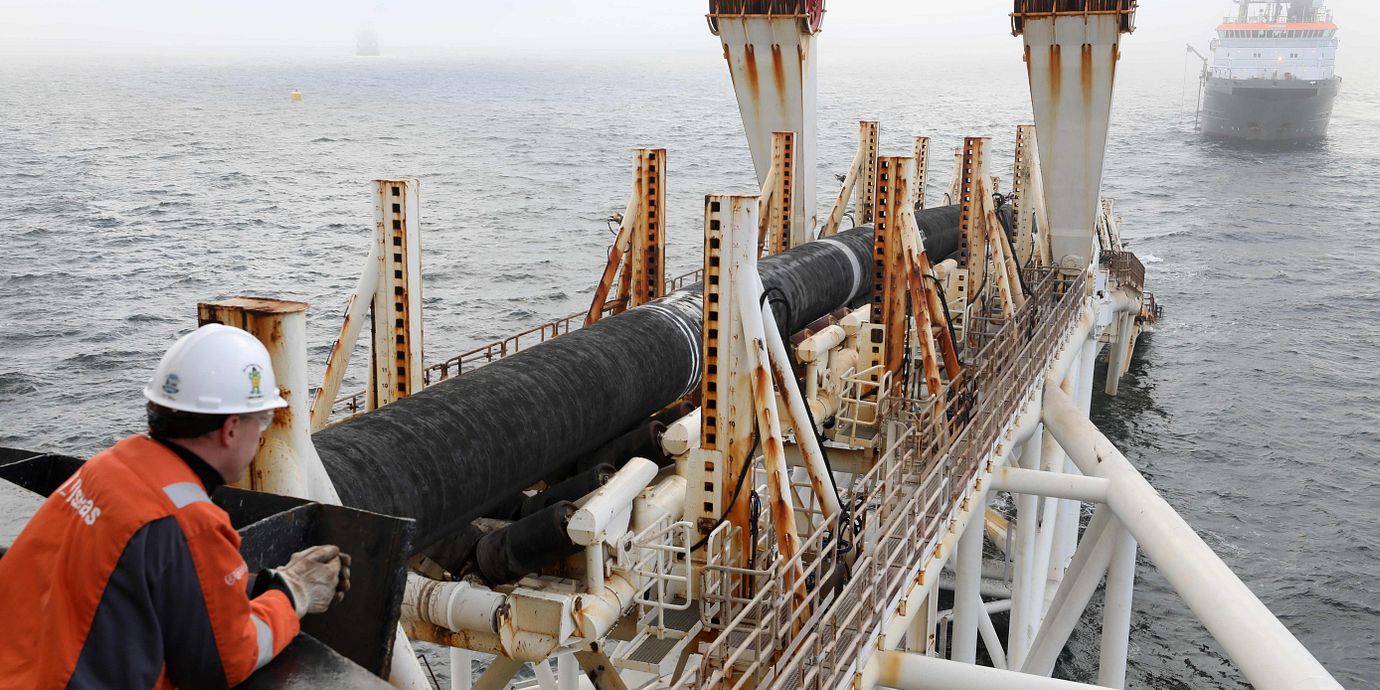
Orsaken är att Gazprom byggt den omdiskuterade gasledningen Nord Stream 2, som går mellan Ryssland och Tyskland, utan Polens tillstånd.
Konkurrensverket straffar även fem andra bolag med böter för att de varit med och finansierat projektet.
Gazprom har inte uttalat sig om den polska boten. Aktien backade omkring 0,8 procent på Moskvabörsen direkt efter beskedet.
bakgrund
Nord Stream 2
Wikipedia (en)
Nord Stream (former names: North Transgas and North European Gas Pipeline; Russian: Северный поток, Severny potok) is a system of offshore natural gas pipelines from Russia to Germany. It includes two lines running from Vyborg to Lubmin near Greifswald forming original Nord Stream, and two lines under construction running from Ust-Luga to Lubmin termed Nord Stream 2. In Lubmin the lines connect to the OPAL line to Olbernhau on the Czech border and to the NEL line to Rehden near Bremen. Nord Stream is owned and operated by Nord Stream AG, whose majority shareholder is the Russian state company Gazprom, and Nord Stream 2 is owned and will be operated by Nord Stream 2 AG, a wholly owned subsidiary of Gazprom.
The first line of Nord Stream (also known as Nord Stream 1) was laid by May 2011 and was inaugurated on 8 November 2011. The second line of Nord Stream was laid in 2011–2012 and was inaugurated on 8 October 2012. At 1,222 km (759 mi) in length, Nord Stream is the longest sub-sea pipeline in the world, surpassing the Langeled pipeline.
Laying Nord Stream 2 was carried out in 2018–2019, and before the imposition of U.S. sanctions which halted the work, it was expected to become operational in mid-2020.Nord Stream has a total annual capacity of 55 billion m3 (1.9 trillion cu ft) of gas, and the addition of Nord Stream 2 is expected to double the capacity to a total of 110 billion m3 (3.9 trillion cu ft).Nord Stream projects have been opposed by the United States as well as several Central and Eastern European countries because of concerns that it would increase Russia's influence in the region. The U.S. resistance of Nord Stream 2 is also influenced by the country's increased production of natural gas, which gives the U.S. Congress economic incentive to resist the Russian supply of gas to the EU, in favour of U.S. shale gas.The name "Nord Stream" occasionally refers to a wider pipeline network, including the feeding onshore pipeline in the Russian Federation, and further connections in Western Europe.
Omni är politiskt obundna och oberoende. Vi strävar efter att ge fler perspektiv på nyheterna. Har du frågor eller synpunkter kring vår rapportering? Kontakta redaktionen