Lula om Mercosur: EU:s ledare måste visa mod
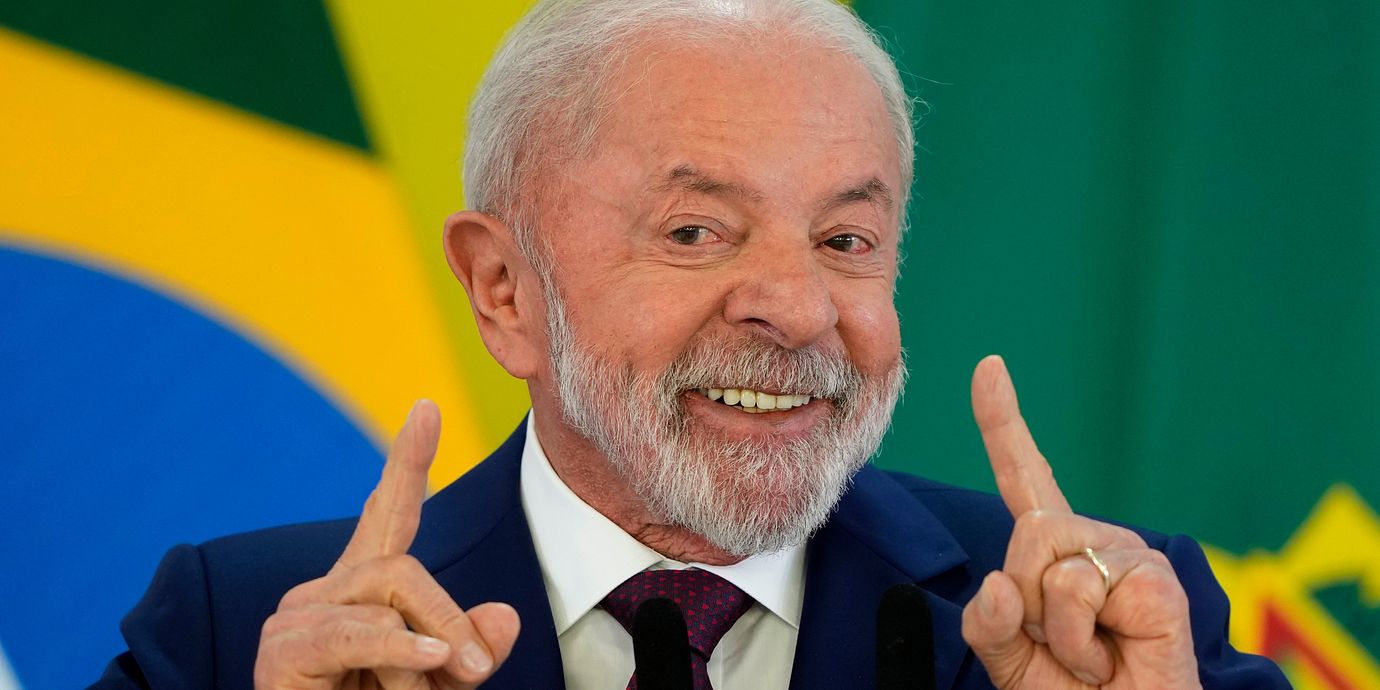
Brasiliens president ”Lula” da Silva uppmanar EU att visa mod och skriva under handelsavtalet med den latinamerikanska tullunionen Mercosur, skriver AFP.
– Utan politisk vilja och mod hos ledarna är det inte möjligt att avsluta förhandlingar som dragit ut på tiden i 26 år, säger Lula i ett tal vid Mercosur-toppmötet i brasilianska Foz do Iguacu.
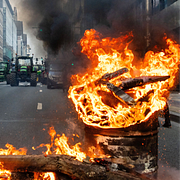
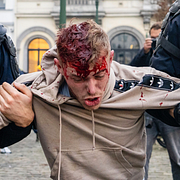
Argentina, Brasilien, Paraguay och Uruguay hade hoppats att avtalet skulle skrivas under på lördagen, men EU tvingades skjuta upp ett beslut till januari efter protester från franska och italienska lantbrukare.
Läs också
bakgrund
Mercosur
Wikipedia (en)
The Southern Common Market (commonly known by abbreviation Mercosur in Spanish and Mercosul in Portuguese) is a South American trade bloc established by the Treaty of Asunción in 1991 and Protocol of Ouro Preto in 1994. Its full members are Argentina, Bolivia, Brazil, Paraguay, and Uruguay. Venezuela is a full member but has been suspended since 1 December 2016. Chile, Colombia, Ecuador, Guyana, Panama, Peru, and Suriname are associate countries.
Mercosur's origins are linked to the discussions for the constitution of a regional economic market for Latin America, which go back to the treaty that established the Latin American Free Trade Association in 1960, which was succeeded by the Latin American Integration Association in the 1980s. At the time, Argentina and Brazil made progress in the matter, signing the Iguaçu Declaration (1985), which established a bilateral commission, which was followed by a series of trade agreements the following year. The Integration, Cooperation and Development Treaty, signed between both countries in 1988, set the goal of establishing a common market, which other Latin American countries could join. Paraguay and Uruguay joined the process and the four countries became signatories to the Treaty of Asunción (1991), which established the Southern Common Market, a trade alliance aimed at boosting the regional economy, moving goods, people among themselves, workforce and capital. Initially a free trade zone was established, in which the signatory countries would not tax or restrict each other's imports. As of 1 January 1995, this area became a customs union, in which all signatories could charge the same quotas on imports from other countries (common external tariff). The following year, Bolivia and Chile acquired membership status. Other Latin American nations have expressed interest in joining the group.
Mercosur's purpose is to promote free trade within the zone and the fluid movement of goods, people, and currency. Since its foundation, Mercosur's functions have been updated and amended many times; it currently confines itself to a customs union, in which there is free intra-zone trade and a common trade policy between member countries. Beyond trade, Mercosur prioritizes deeper regional integration by enabling the free movement of people across borders, supported through its December 2014 agreement with the International Organization for Migration. In 2023, the Mercosur had generated a nominal annual gross domestic product (GDP) (PPP) of around 5.7 trillion US dollars, placing the bloc as the 5th largest economy in the world. The bloc places high on the human development index.
Omni är politiskt obundna och oberoende. Vi strävar efter att ge fler perspektiv på nyheterna. Har du frågor eller synpunkter kring vår rapportering? Kontakta redaktionen