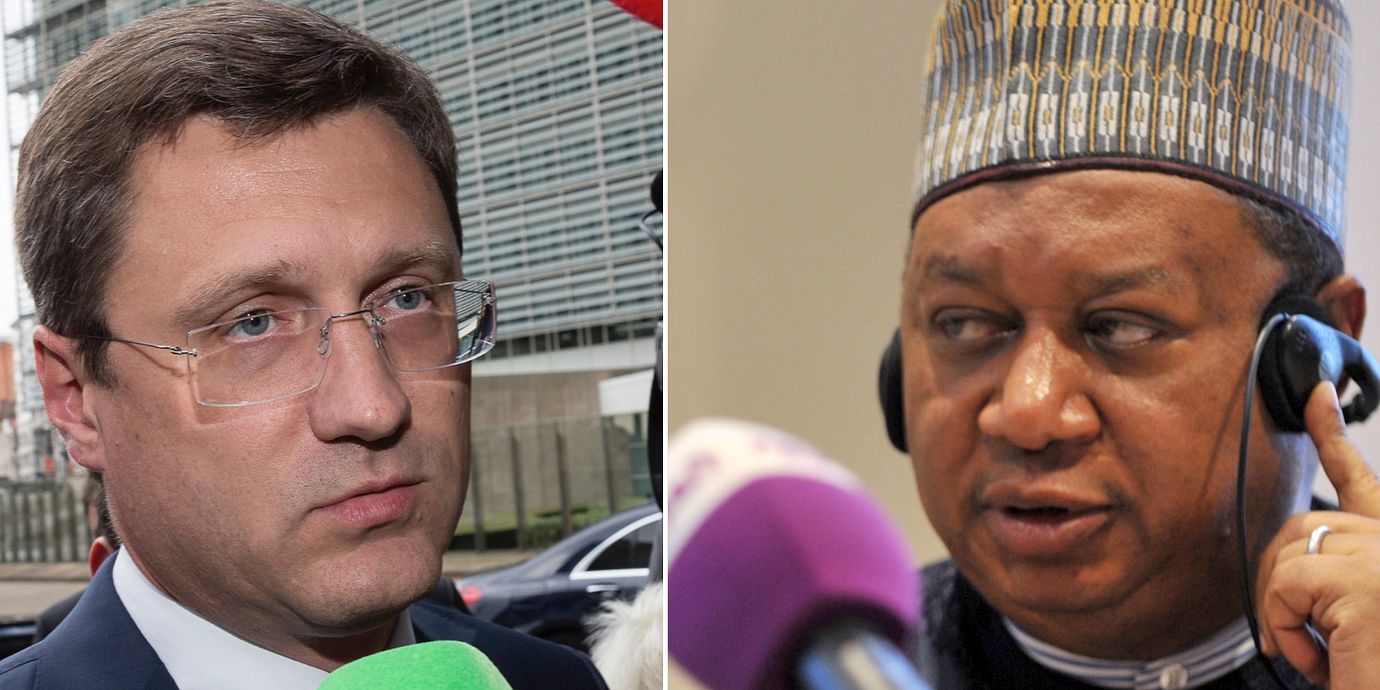
Opec-chefen vill diskutera oljeavtal med Ryssland
Oljekartellen Opecs generalsekreterare Mohammed Barkindo ska träffa Rysslands energiminister Alexander Novak för att diskutera en begränsning av den ryska oljeproduktionen. Det skriver Wall Street Journal och hänvisar till en källa.
Ryssland, som inte är med i Opec, har tidigare varit motvilligt inställd till alla försök att minska oljeutbudet. Förra veckan kom Opec-medlemmarna överens om att minska sin produktion med uppemot 700 000 fat om dagen, men efterlyste redan då samarbete med oljeproducerande länder utanför Opec.
Tidigare om Opecs avtal:
bakgrund
Opec
Wikipedia (en)
Organization of the Petroleum Exporting Countries (OPEC, /ˈoʊpɛk/ OH-pek, or OPEP in several other languages) is an intergovernmental organization of 14 nations, founded in 1960 in Baghdad by the first five members, and headquartered since 1965 in Vienna. As of 2015, the 14 countries accounted for an estimated 43 percent of global oil production and 73 percent of the world's "proven" oil reserves, giving OPEC a major influence on global oil prices.
OPEC's stated mission is "to coordinate and unify the petroleum policies of its member countries and ensure the stabilization of oil markets, in order to secure an efficient, economic and regular supply of petroleum to consumers, a steady income to producers, and a fair return on capital for those investing in the petroleum industry." As of July 2016, OPEC's members are Algeria, Angola, Ecuador, Gabon, Indonesia, Iran, Iraq, Kuwait, Libya, Nigeria, Qatar, Saudi Arabia (the de facto leader), United Arab Emirates, and Venezuela. Two-thirds of OPEC's oil production and reserves are in its six Middle Eastern countries that surround the oil-rich Persian Gulf.
The formation of OPEC marked a turning point toward national sovereignty over natural resources, and OPEC decisions have come to play a prominent role in the global oil market and international relations. The effect can be particularly strong when wars or civil disorders lead to extended interruptions in supply. In the 1970s, restrictions in oil production led to a dramatic rise in oil prices and OPEC revenue and wealth, with long-lasting and far-reaching consequences for the global economy. In the 1980s, OPEC started setting production targets for its member nations; and generally when the production targets are reduced, oil prices increase. In December 2014, "OPEC and the oil men" ranked as #3 on Lloyd's list of "the top 100 most influential people in the shipping industry" – although their influence on international trade is periodically challenged by the expansion of non-OPEC energy sources, and by the recurring temptation for individual OPEC members to exceed production ceilings.
Omni är politiskt obundna och oberoende. Vi strävar efter att ge fler perspektiv på nyheterna. Har du frågor eller synpunkter kring vår rapportering? Kontakta redaktionen