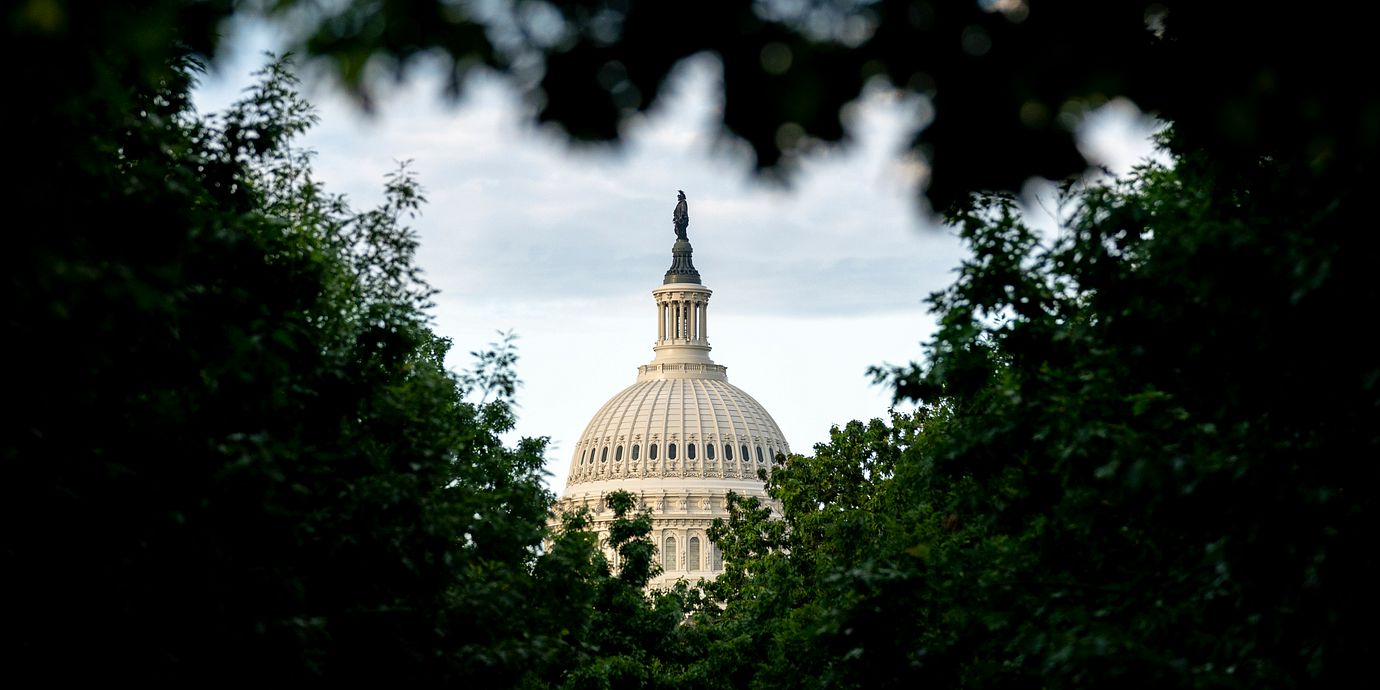
Kaptolium i Washington DC. (Andrew Harnik / AP)

Republikaner tvekar om nya budgetpaket före valet

Flera republikanska senatorer tvekar inför att använda fler särskilda budgetprocesser, så kallad ”reconciliation”, före mellanårsvalet för att genomföra ytterligare delar av Donald Trumps agenda. Det rapporterar The Hill.

Tveksamheten har vuxit efter att representanthuset förra veckan röstade igenom ett smalt budgetförslag för departementet för inrikes säkerhet. Senatorerna oroar sig för att nya budgetsatsningar kan försvaga deras inflytande över den ordinarie budgetprocessen.

Vissa senatorer vill se ökade försvarsanslag medan andra, däribland Ted Cruz från Texas, vill driva igenom nya skattesänkningar eller förlänga Trumps skattesänkningar för arbetarklassen.

Men försöken möter motstånd från majoritetsledaren John Thune, som varnar för att Republikanerna då kan tvingas återuppta striden om ”Big Beautiful Bill”. Även ledamöter i senatens budgetutskott är kritiska och vill hantera Pentagonfinansieringen genom den ordinarie budgetprocessen.

En anonym senator uppger också att pessimismen inom partiet kring chanserna i mellanårsvalet är en del av förklaringen till att vissa vill få igenom så mycket som möjligt genom den särskilda budgetprocessen.

bakgrund
 
Läs mer om hur systemet fungerar här
Wikipedia (en)
Budget reconciliation is a special parliamentary procedure of the United States Congress set up to expedite the passage of certain federal budget legislation in the Senate. The procedure overrides the Senate's filibuster rules, which may otherwise require a 60-vote supermajority for passage. Bills described as reconciliation bills can pass the Senate by a simple majority of 51 votes or 50 votes plus the vice president's as the tie-breaker. The reconciliation procedure also applies to the House of Representatives, but it has minor significance there, as the rules of the House of Representatives do not have a de facto supermajority requirement. Because of greater polarization, gridlock, and filibustering in the Senate in recent years, budget reconciliation has come to play an important role in how the United States Congress legislates. Budget reconciliation bills can deal with mandatory spending, revenue, and the federal debt limit, and the Senate can pass one bill per year affecting each subject. Congress can thus pass a maximum of three reconciliation bills per year, though in practice it has often passed a single reconciliation bill affecting both spending and revenue. Policy changes that are extraneous to the budget are limited by the Byrd rule, which also prohibits reconciliation bills from increasing the federal deficit after a ten-year period or making changes to Social Security. Reconciliation does not apply to discretionary spending, which is instead managed through the annual appropriations process. The reconciliation process was created by the Congressional Budget Act of 1974 and was first used in 1980. Bills passed using the reconciliation process include the Consolidated Omnibus Budget Reconciliation Act of 1985, the Personal Responsibility and Work Opportunity Act of 1996, the Economic Growth and Tax Relief Reconciliation Act of 2001, the Health Care and Education Reconciliation Act of 2010, the Tax Cuts and Jobs Act of 2017, the American Rescue Plan Act of 2021, the Inflation Reduction Act of 2022, and the One Big Beautiful Bill Act.
Omni är politiskt obundna och oberoende. Vi strävar efter att ge fler perspektiv på nyheterna. Har du frågor eller synpunkter kring vår rapportering? Kontakta redaktionen