Ryssland uppges styra skuggregering i Ukraina
Ryssland driver i praktiken en skuggregering i östra Ukraina. Det skriver den tyska tidningen Bild och hänvisar till protokoll från vad som officiellt är en biståndskommission.
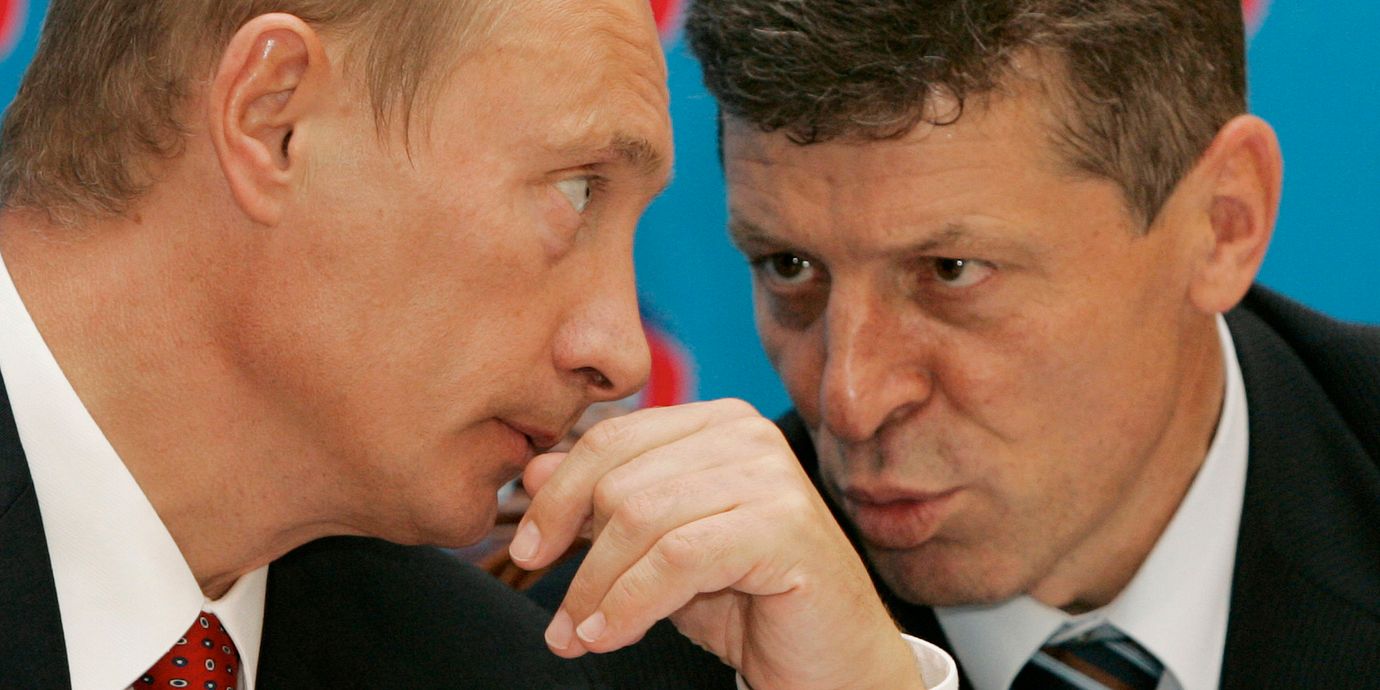
Sex arbetsgrupper vid fem olika ryska departement uppges sköta administrativa uppgifter såsom infrastruktur och upprättandet av en elmarknad i städerna Donetsk och Luhansk. Arbetsgrupperna står under överinseende av den ryska säkerhetstjänsten FSB och svarar inför Rysslands vicepresident Dmitry Kozak, enligt Bild.
bakgrund
Kriget i Donbass
Wikipedia (en)
The War in Donbass (also called the War in Ukraine, War in Eastern Ukraine) is an armed conflict in the Donbass region of Ukraine. From the beginning of March 2014, demonstrations by pro-Russian and anti-government groups took place in the Donetsk and Luhansk oblasts of Ukraine, together commonly called the "Donbass", in the aftermath of the 2014 Ukrainian revolution and the Euromaidan movement. These demonstrations, which followed the annexation of Crimea by the Russian Federation, and which were part of a wider group of concurrent pro-Russian protests across southern and eastern Ukraine, escalated into an armed conflict between the separatist forces of the self-declared Donetsk and Luhansk People's Republics (DPR and LPR respectively), and the Ukrainian government. Prior to a change of the top leadership in August, the separatists were largely led by Russian citizens. During the middle of 2014, Russian paramilitaries were reported to make up between 15% and 80% of the combatants.
Between 22 and 25 August, Russian artillery, personnel, and what Russia called a "humanitarian convoy" were reported to have crossed the border into Ukrainian territory without the permission of the Ukrainian government. Crossings were reported to have occurred both in areas under the control of pro-Russian forces and areas that were not under their control, such as the south-eastern part of Donetsk Oblast, near Novoazovsk. These events followed the reported shelling of Ukrainian positions from the Russian side of the border over the course of the preceding month. Head of the Security Service of Ukraine Valentyn Nalyvaichenko said that the events of 22 August were a "direct invasion by Russia of Ukraine". Western and Ukrainian officials described these events as a "stealth invasion" of Ukraine by Russia.
As a result of this, DPR and LPR insurgents regained much of the territory they had lost during the preceding government military offensive. A deal to establish a ceasefire, called the Minsk Protocol, was signed on 5 September 2014. Violations of the ceasefire on both sides were common. Amidst the solidification of the line between insurgent and government-controlled territory during the ceasefire, warlords took control of swathes of land on the insurgent side, leading to further destabilisation. The ceasefire completely collapsed in January 2015, with renewed heavy fighting across the conflict zone, including at Donetsk International Airport and Debaltseve. A new ceasefire, called Minsk II, was agreed to on 12 February 2015. Immediately following the signing of the agreement, separatist forces launched an offensive on Debaltseve and forced Ukrainian forces to withdraw from it. In the months after the fall of Debaltseve, minor skirmishes continued along the line of contact, but no territorial changes occurred. This state of stalemate led the war to be labelled a "frozen conflict".
Omni är politiskt obundna och oberoende. Vi strävar efter att ge fler perspektiv på nyheterna. Har du frågor eller synpunkter kring vår rapportering? Kontakta redaktionen