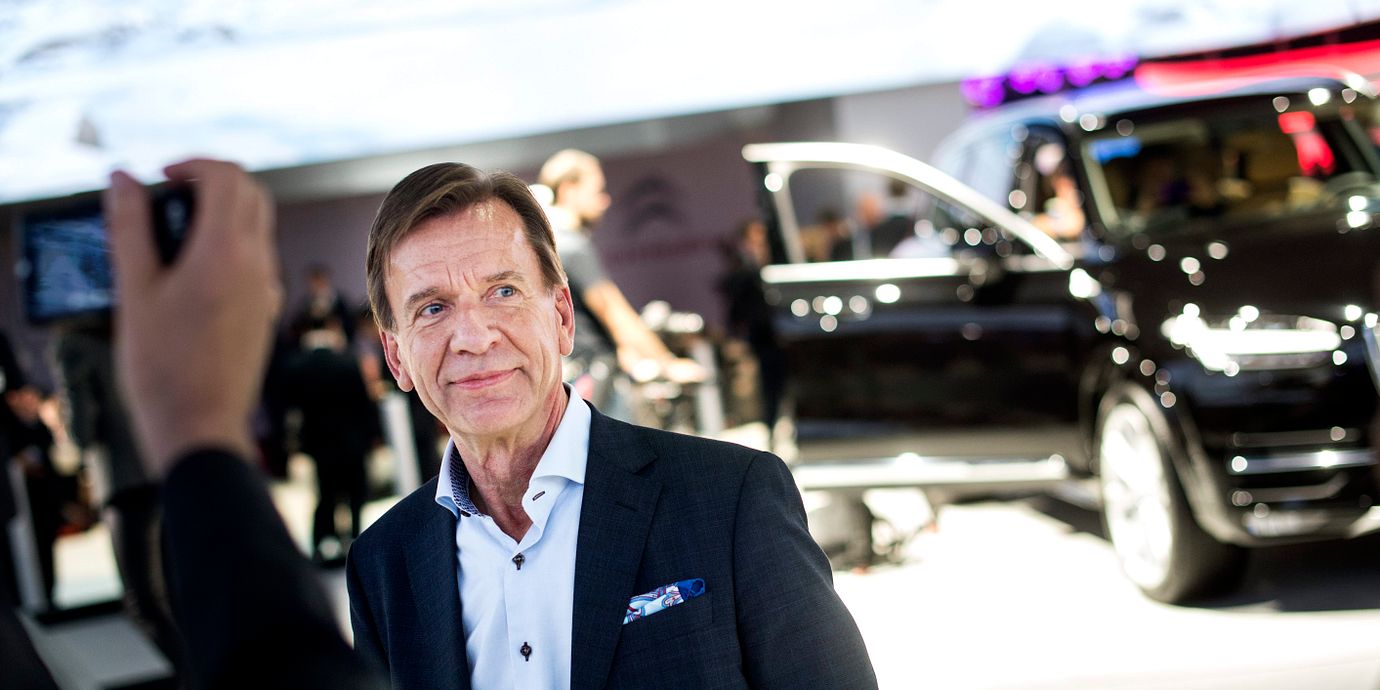
Samuelsson: Glad att vi byggde fabrik i USA
För två år sedan valde Volvo mellan USA och Mexiko som plats för en ny fabrik. Valet föll på Charleston i South Carolina, ett val som var långt ifrån självklart, säger Volvo Cars vd Håkan Samuelsson i en intervju med DI.
I dag framstår valet som ett lyckokast.
– När alla andra byggde i Mexiko beslöt vi oss för att bygga i USA för att vi vill visa våra kunder och återförsäljare att vi menar allvar med att USA ska vara en av våra tre hemmamarknader.
Samuelsson säger också i intervjun att han gärna behåller sitt jobb även om hans vd-kontrakt löper ut 2018. Målet är att bli ett ”riktigt globalt företag”, med tre hemmamarknader och en årlig försäljning på 800 000 bilar, att jämföra med fjolårets 534 000 bilar.
Läs tidigare
bakgrund
Volvo Cars
Wikipedia (en)
Volvo Car Corporation (Swedish: Volvo personvagnar) (stylized as VOLVO) is a Swedish automobile manufacturer established in 1927 and headquartered in Gothenburg, Sweden, where it operates out of the VAK building. It is a wholly owned subsidiary of Zhejiang Geely Holding Group of China.
Volvo Car Corporation was originally founded as a subsidiary of the ball bearing maker SKF. When Volvo AB was introduced on the Swedish stock exchange in 1935, SKF sold most of the shares in the company. Volvo Cars was owned by AB Volvo until 1999, when it was acquired by the Ford Motor Company as part of its Premier Automotive Group. Geely Holding Group then acquired Volvo Cars from Ford in 2010.
Volvo Cars manufactures and markets sport utility vehicles, station wagons, sedans, compact executive sedans, and coupes. With approximately 2,300 local dealers from around 100 national sales companies worldwide, Volvo Cars' largest markets are the United States, Sweden, China and Belgium. Volvo Cars sold 503,127 cars in 2015, the first time it has sold more than half a million cars in its 89 year history. Volvo reported strong sales from all three core global regions. Sales in Europe rose 10.6 per cent for the year to 269,249, representing 53.5 per cent of total global volume. Volvo’s revival in the US gained momentum with sales in the US up 24.3 per cent in 2015 while China was flat amid a challenging sales environment, but looked stronger at the end of the year with sales up 11.4 per cent in the fourth quarter.
Omni är politiskt obundna och oberoende. Vi strävar efter att ge fler perspektiv på nyheterna. Har du frågor eller synpunkter kring vår rapportering? Kontakta redaktionen