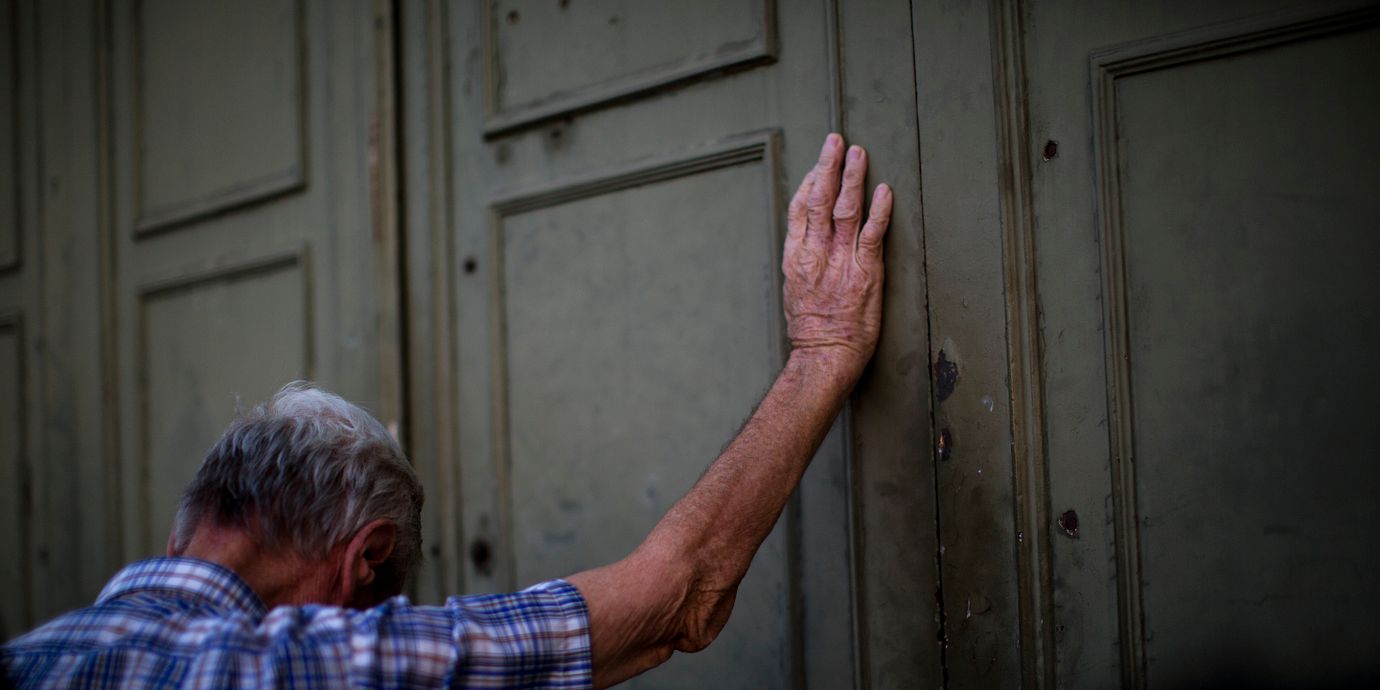
Arkivbild: En man lutar sig mot dörren till Greklands nationalbank i väntan på att få ta ut pengar. (Emilio Morenatti / TT / NTB Scanpix)

”Grekiska krisen handlar inte bara om politik”

Pensionärer som fått sina inkomster halverade, hårt pressad sjukvård och enorma arbetslöshetstal. I en ledare lyfter brittiska The Independent upp den mänskliga baksidan av krisens Grekland, som fått stå i skuggan av politiskt storspel och ekonomiska intressen. Medan framför allt Internationella valutafonden IMF och Tyskland strider om huruvida Greklands lån ska skrivas ner eller ej, har medicinerna tagit slut på vissa grekiska sjukhus, samtidigt som landets pensionärer tvingas vända sig till välgörenhetsorganisationer för att få privatekonomin att gå ihop. De unga högutbildade som har möjlighet att flytta flyr till Storbritannien och Tyskland för att få jobb.

Den grekiska skuldkrisen, skriver tidningen, är en ”humanitär fråga, eftersom det grekiska folket står ansikte mot ansikte med en social och mänsklig katastrof.”
bakgrund
 
Greklands skuldkris
Wikipedia (en)
The Greek government-debt crisis (also known as the Greek Depression) is the sovereign debt crisis faced by Greece in the aftermath of the financial crisis of 2007–08. The Greek crisis started in late 2009, triggered by the turmoil of the Great Recession, structural weaknesses in the Greek economy, and revelations that previous data on government debt levels and deficits had been undercounted by the Greek government. This led to a crisis of confidence, indicated by a widening of bond yield spreads and rising cost of risk insurance on credit default swaps compared to the other Eurozone countries, particularly Germany. The government enacted 12 rounds of tax increases, spending cuts, and reforms from 2010 to 2016, which at times triggered local riots and nationwide protests. Despite these efforts, the country required bailout loans in 2010, 2012, and 2015 from the International Monetary Fund, Eurogroup, and European Central Bank, and negotiated a 50% "haircut" on debt owed to private banks in 2011. After a popular referendum which rejected further austerity measures required for the third bailout, and after closure of banks across the country (which lasted for several weeks), on June 30th 2015, Greece became the first developed country to fail to make an IMF loan repayment. At that time, debt levels had reached €323bn or some €30,000 per capita.
Omni är politiskt obundna och oberoende. Vi strävar efter att ge fler perspektiv på nyheterna. Har du frågor eller synpunkter kring vår rapportering? Kontakta redaktionen