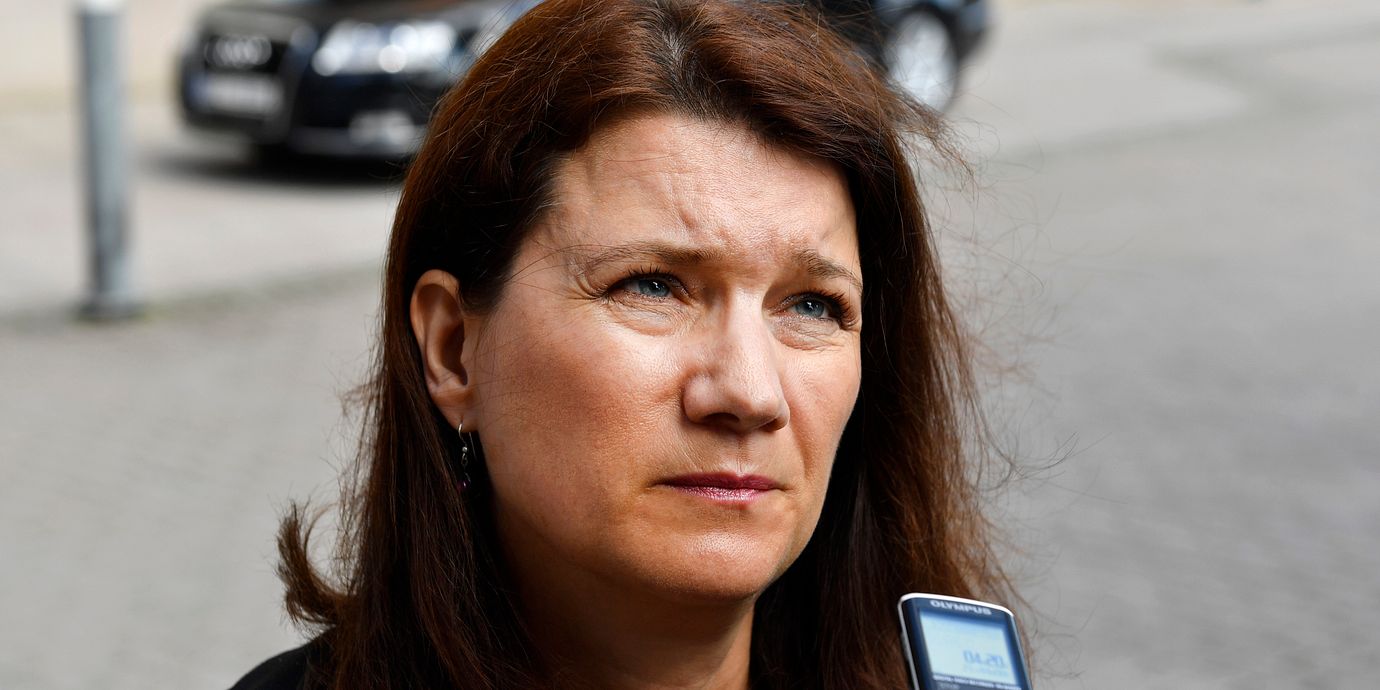
Handelsminister Ann Linde: Lutar åt ”hård” brexit
Den brittiska regeringen är djupt splittrad om hur utträdet ur EU ska gå till och om landet ska välja att vara kvar i EU:s inre marknad eller lämna – en så kallad ”hård” brexit. Det säger Ann Linde i en intervju med DN efter att bland annat ha mött landets nybildade brexit-departement Dexeu:
– Min bedömning av de samtalen är att britterna ännu inte bestämt sig, men att det lutar åt ett hårt Brexit.
Storbritannien är Sveriges tredje viktigaste handelspartner och regeringen vill därför ha djupare analyser om hur det påverkar Sverige. Med anledning av det har regeringen gett Kommerskollegium i uppdrag att utreda frågan.
bakgrund
Brexit
Wikipedia (en)
The United Kingdom (UK) intends to withdraw from the European Union (EU), a process commonly known as Brexit, as a result of a June 2016 referendum in which 51.9% voted to leave the EU. The separation process is complex, causing political and economic changes for the UK and other countries. As of September 2016, neither the timetable nor the terms for withdrawal have been established: in the meantime, the UK remains a full member of the European Union. The term "Brexit" is a portmanteau of the words "British" and "exit".
The process of withdrawal from the European Union has, since 2007, been governed by Article 50 of the Treaty on European Union. No member state has ever left the EU. Under Article 50 the withdrawal must be in accordance with the Member State's constitutional requirements and uncertainty exists as to the constitutional requirements in the UK. Unless extensions are agreed to unanimously by the Council of the European Union, the timing for leaving under the article is two years from when the UK gives official notice, but this official notice was not given immediately following the referendum in June 2016. The assumption is that during the two-year window new agreements will be negotiated, but there is no requirement that there be new agreements. Some aspects, such as trade agreements, may be made difficult to negotiate by the EU until after Britain has formally left the EU.
Withdrawal has been the goal of various individuals, advocacy groups, and political parties since the UK joined the European Economic Community (EEC), the predecessor of the EU, in 1973, though continued membership of the EEC and the Common Market was approved in a 1975 referendum by 67.2% of votes.
Omni är politiskt obundna och oberoende. Vi strävar efter att ge fler perspektiv på nyheterna. Har du frågor eller synpunkter kring vår rapportering? Kontakta redaktionen