Högsta domstolen beslutar om kritiserat inreseförbud
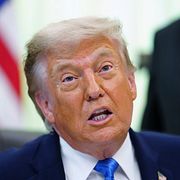
USA:s högsta domstol inleder i dag sin granskning av Donald Trumps omdiskuterade inreseförbud för invånare från flera länder med i huvudsak muslimsk befolkning. Delstaten Hawaii står som motpart i målet och menar att förbudet bland annat bryter mot USA:s konstitution.
Domstolar på flera nivåer har tagit upp förbudet men i december beslutade Högsta domstolen att det skulle tillåtas träda i kraft i väntan på att de juridiska processerna skulle avslutas.
Beslutet från Högsta domstolen väntas komma först i juni.
bakgrund
Inreseförbudet (engelska)
Wikipedia (en)
Executive Order 13769, titled Protecting the Nation from Foreign Terrorist Entry into the United States, often referred to as the Muslim ban or the travel ban, was an executive order issued by United States President Donald Trump. Except for the extent to which it was blocked by various courts, it was in effect from 27 January 2017, until 16 March 2017, when it was superseded by Executive Order 13780. Executive Order 13769 lowered the number of refugees to be admitted into the United States in 2017 to 50,000, suspended the U.S. Refugee Admissions Program (USRAP) for 120 days, suspended the entry of Syrian refugees indefinitely, directed some cabinet secretaries to suspend entry of those whose countries do not meet adjudication standards under U.S. immigration law for 90 days, and included exceptions on a case-by-case basis. Homeland Security lists these countries as Iran, Iraq, Libya, Somalia, Sudan, Syria, and Yemen. More than 700 travelers were detained, and up to 60,000 visas were "provisionally revoked".
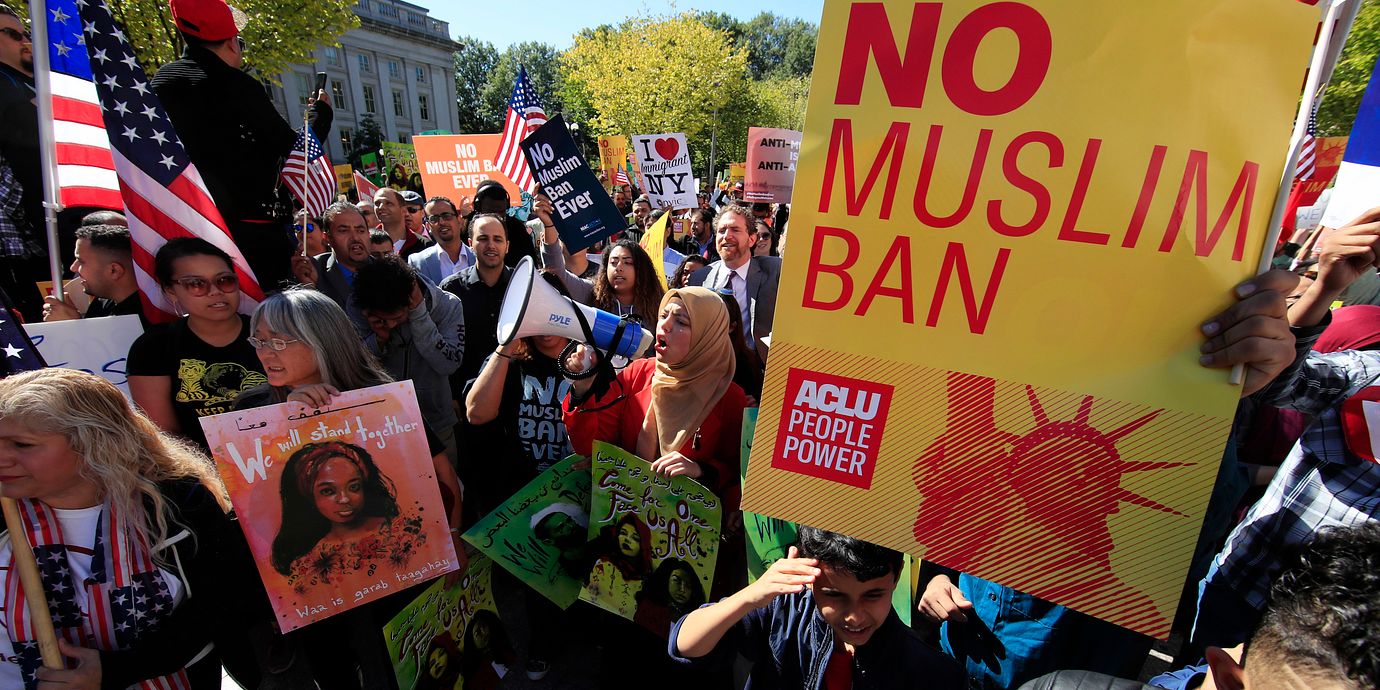
Immediately, there were numerous protests and legal challenges, with some calling it a "Muslim ban" because all of the affected countries had a Muslim majority. A nationwide temporary restraining order (TRO) was issued on 3 February 2017 in the case Washington v. Trump, which was upheld by the United States Court of Appeals for the Ninth Circuit on 9 February 2017. Consequently, the Department of Homeland Security (DHS) stopped enforcing portions of the order and the State Department re-validated visas that had been previously revoked. The order was criticized by members of Congress from both parties, universities, business leaders, Catholic bishops, top United Nations officials, a group of 40 Nobel laureates, Jewish organizations, 1,000 U.S. diplomats who signed a dissent cable, thousands of academics, and longstanding U.S. allies.
Omni är politiskt obundna och oberoende. Vi strävar efter att ge fler perspektiv på nyheterna. Har du frågor eller synpunkter kring vår rapportering? Kontakta redaktionen