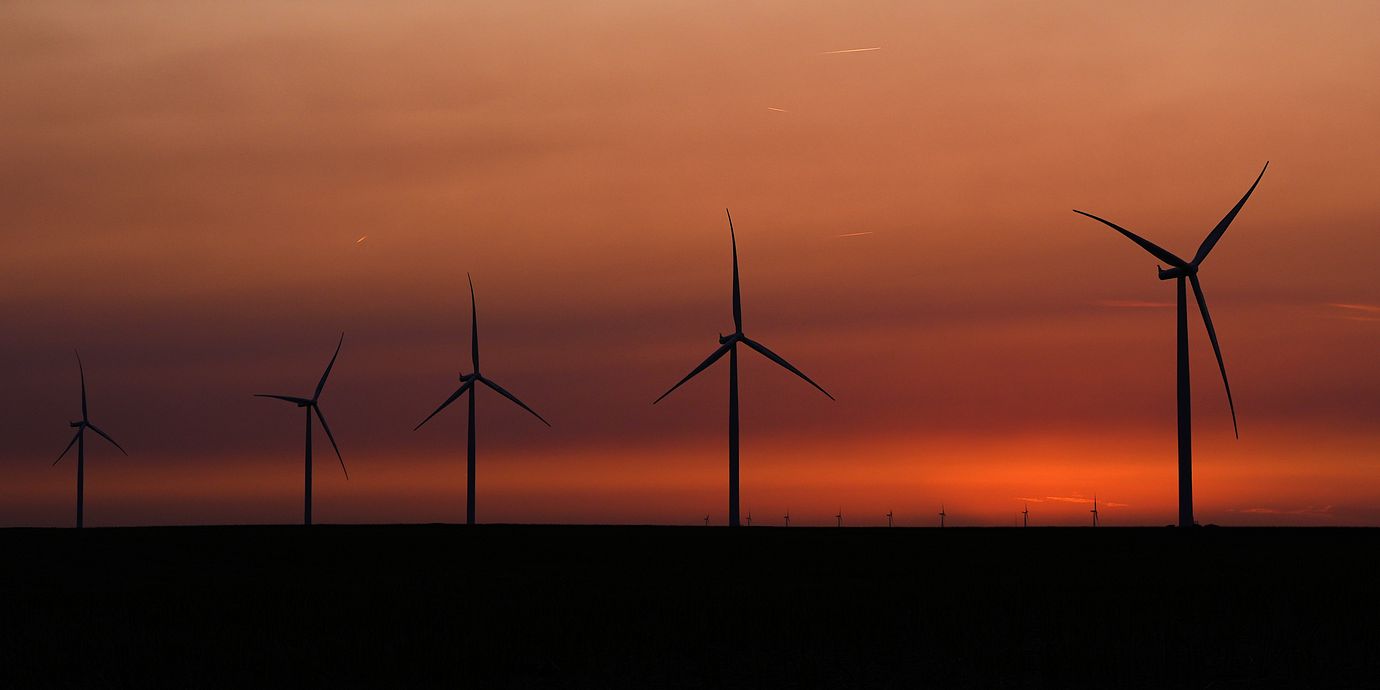
Vindkraftverk. (Charlie Riedel /AP/TT / AP)

IPCC kan pensionera sitt mest extrema klimatscenario

FN:s klimatpanel IPCC verkar vara på väg att överge sitt mest extrema framtidsscenario för utsläpp, känt som RCP 8.5, rapporterar Washington Post. Forskare bedömer att scenariot ”inte längre framstår som trovärdigt”.

RCP 8.5 har länge använts som ett värsta tänkbart scenario där världen fortsätter att bränna stora mängder fossila bränslen utan att begränsa utsläppen. Men många forskare menar att utvecklingen av förnybar energi har gjort en sådan utveckling mindre sannolik.

Klimatskeptiker som USA:s president Donald Trump tolkar beskedet som att hotet från global uppvärmning överdrivits.

”Good riddance!”, skrev han på X i helgen.

Samtidigt varnar klimatforskare för att riskerna fortfarande är stora.

”Så länge utsläppen av koldioxid ligger över noll kommer världen att fortsätta bli varmare”, skrev flera forskare i ett blogginlägg tidigare i veckan.
bakgrund
 
Representative Concentration Pathway
Wikipedia (en)
Representative Concentration Pathways (RCP) are climate change scenarios to project future greenhouse gas concentrations. These pathways (or trajectories) describe future greenhouse gas concentrations (not emissions) and have been formally adopted by the IPCC. The pathways describe different climate change scenarios, all of which were considered possible depending on the amount of greenhouse gases (GHG) emitted in the years to come. The four RCPs – originally RCP2.6, RCP4.5, RCP6, and RCP8.5 – are labelled after the expected changes in radiative forcing values from the year 1750 to the year 2100 (2.6, 4.5, 6, and 8.5 W/m2, respectively). The IPCC Fifth Assessment Report (AR5) began to use these four pathways for climate modeling and research in 2014. The higher values mean higher greenhouse gas emissions and therefore higher global surface temperatures and more pronounced effects of climate change. The lower RCP values, on the other hand, are more desirable for humans but would require more stringent climate change mitigation efforts to achieve them. In the IPCC's Sixth Assessment Report the original pathways are now being considered together with Shared Socioeconomic Pathways. There are three new RCPs, namely RCP1.9, RCP3.4 and RCP7. A short description of the RCPs is as follows: RCP 1.9 is a pathway that limits global warming to below 1.5 °C, the aspirational goal of the Paris Agreement. RCP 2.6 is a very stringent pathway. RCP 3.4 represents an intermediate pathway between the very stringent RCP2.6 and less stringent mitigation efforts associated with RCP4.5. RCP 4.5 is described by the IPCC as an intermediate scenario. In RCP 6, emissions peak around 2080, then decline. RCP7 is a baseline outcome rather than a mitigation target. In RCP 8.5 emissions continue to rise throughout the 21st century. For the extended RCP2.6 scenario, global warming of 0.0 to 1.2 °C is projected for the late 23rd century (2281–2300 average), relative to 1986–2005. For the extended RCP8.5, global warming of 3.0 to 12.6 °C is projected over the same time period.

Gå förbi betalväggar!

Omni Mer låser upp en mängd artiklar. En smidig lösning när du vill fördjupa dig.

Omni är politiskt obundna och oberoende. Vi strävar efter att ge fler perspektiv på nyheterna. Har du frågor eller synpunkter kring vår rapportering? Kontakta redaktionen