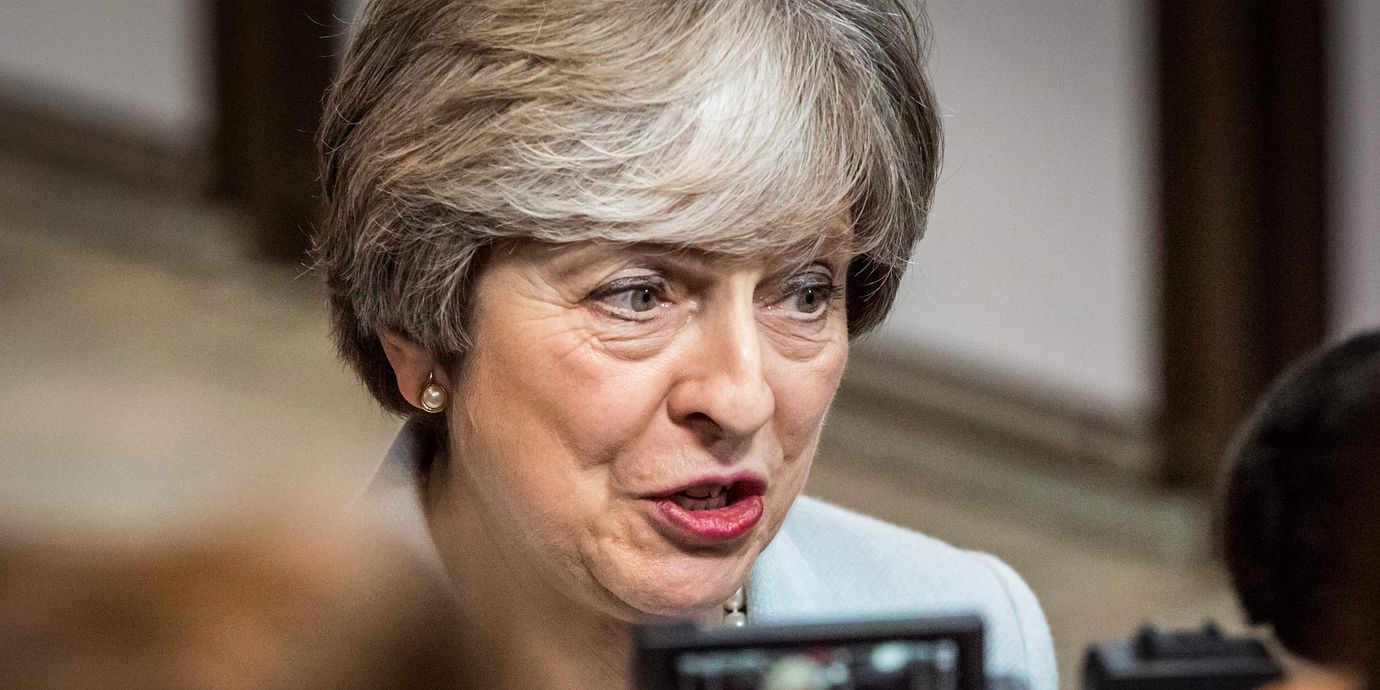
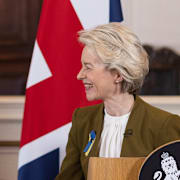
Storbritanniens premiärminister Theresa May. (AURORE BELOT / AFP)

Irlands EU-kommissionär: Kan lägga veto mot avtal

Den tilltagande krisen kring vad som ska hända med den irländska landgränsen mot Storbritannien måste få en snar lösning. Det anser Irlands EU-kommissionär Phil Hogan. Han skruvar upp tonläget i frågan i en intervju med den The Guardian-ägda tidningen Observer.

Den brittiska premiärministern Theresa May måste lägga om sin färdplan för det brittiska utträdet ur EU dramatiskt, enligt honom. Gör hon inte det kommer Irland att ihärda om sitt hot om veto mot ett potentiellt frihandelsavtal mellan Storbritannien och unionen efter brexit.

– Om Storbritannien eller Nordirland förblir inom EU:s tullunion eller – ännu bättre – den inre marknaden, så skulle det inte finnas någon problematik kring gränsen, säger han till Observer.

– Jag är förbluffad över den blinda tilltro vissa i London har till ett hypotetiskt framtida frihandelsavtal.
Läs även

bakgrund
 
Brexit
Wikipedia (en)
Brexit ( or ) is the popular term for the prospective withdrawal of the United Kingdom (UK) from the European Union (EU). In a referendum on 23 June 2016, 51.9% of the participating UK electorate (the turnout was 72.2% of the electorate) voted to leave the EU. On 29 March 2017, the British government invoked Article 50 of the Treaty on the European Union. The UK is thus on course to leave the EU on 29 March 2019. Prime Minister Theresa May announced that the UK would not seek permanent membership of the single market or the customs union after leaving the EU and promised to repeal the European Communities Act of 1972 and incorporate existing European Union law into UK domestic law. A new government department, the Department for Exiting the European Union (DExEU), was created in July 2016, with Eurosceptic David Davis appointed its first Secretary of State. Negotiations with the EU officially started in June 2017. The UK joined the European Communities (EC) in 1973, with membership confirmed by a referendum in 1975. In the 1970s and 1980s, withdrawal from the EC was advocated mainly by Labour Party members and trade union figures. From the 1990s, the main advocates of withdrawal were the newly founded UK Independence Party (UKIP) and an increasing number of Eurosceptic Conservative Party members.
Omni är politiskt obundna och oberoende. Vi strävar efter att ge fler perspektiv på nyheterna. Har du frågor eller synpunkter kring vår rapportering? Kontakta redaktionen