Pingvinbajs kan skynda på snösmältningen i Antarktis
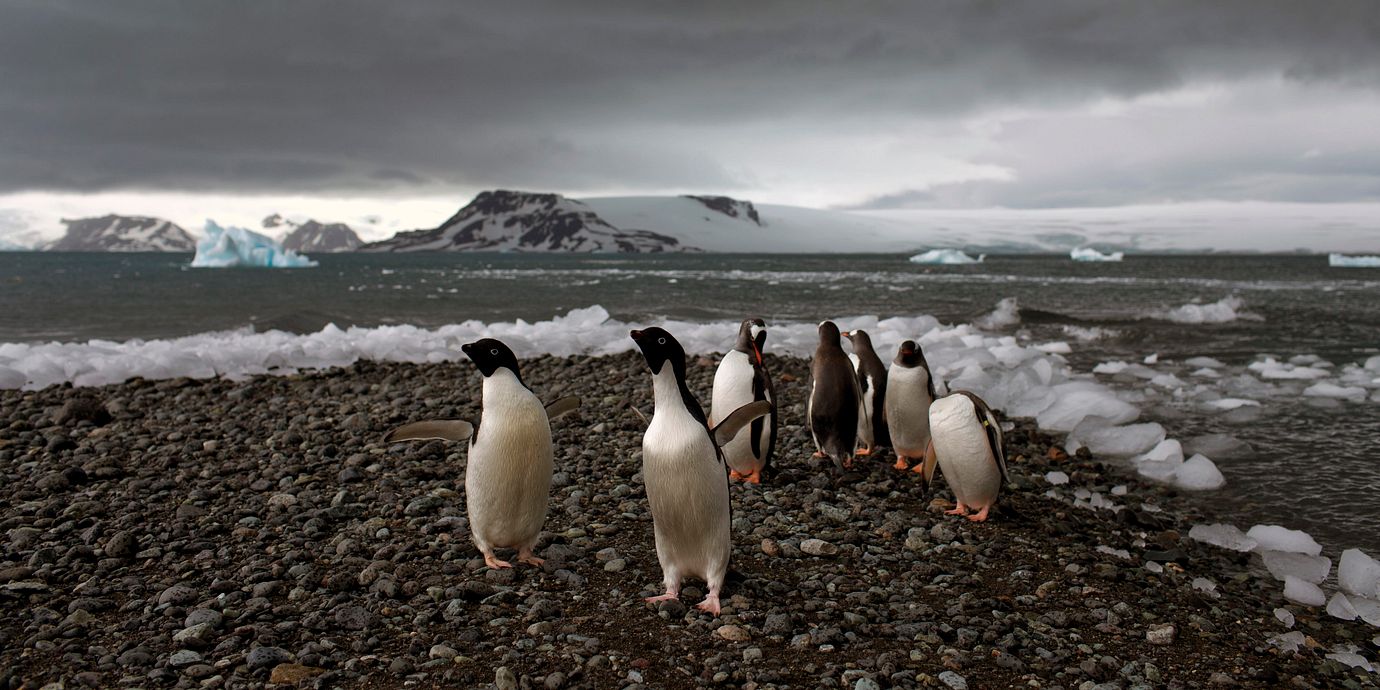
Pingvinernas bajs kan bidra till att snön smälter snabbare i Antarktis, visar en ny studie. Avföringen göder gröna snöalger, som absorberar mer solljus än vit snö och därmed påskyndar smältningen.
”Pingvinernas guano fungerar som ett gödningsmedel […] som ger näring åt täta blomningar av gröna snöalger”, skriver studiens huvudförfattare Alia Khan.
När pingvinerna rör sig närmare Sydpolen kan algerna spridas till nya områden – något som hittills inte räknats in i forskarnas prognoser.
bakgrund
Guano
Wikipedia (en)
Guano (Spanish from Quechua: wanu) is the accumulated excrement of seabirds or bats. Guano is a highly effective fertiliser due to the high content of nitrogen, phosphate, and potassium, all key nutrients essential for plant growth. Guano was also, to a lesser extent, sought for the production of gunpowder and other explosive materials.
The 19th-century seabird guano trade played a pivotal role in the development of modern input-intensive farming. The demand for guano spurred the human colonisation of remote bird islands in many parts of the world.
Unsustainable seabird guano mining processes have resulted in permanent habitat destruction and the loss of millions of seabirds.
Bat guano is found in caves throughout the world. Many cave ecosystems are wholly dependent on bats to provide nutrients via their guano which supports bacteria, fungi, invertebrates, and vertebrates. The loss of bats from a cave can result in the extinction of species that rely on their guano. Unsustainable harvesting of bat guano may cause bats to abandon their roost.
Demand for guano rapidly declined after 1910 with the development of the Haber–Bosch process for extracting nitrogen from the atmosphere.
Guano mining continues in Chile with the annual guano production in Chile ranging from 2,091 to 4,601 metric tons per year in the 2014–2023 period.
Omni är politiskt obundna och oberoende. Vi strävar efter att ge fler perspektiv på nyheterna. Har du frågor eller synpunkter kring vår rapportering? Kontakta redaktionen