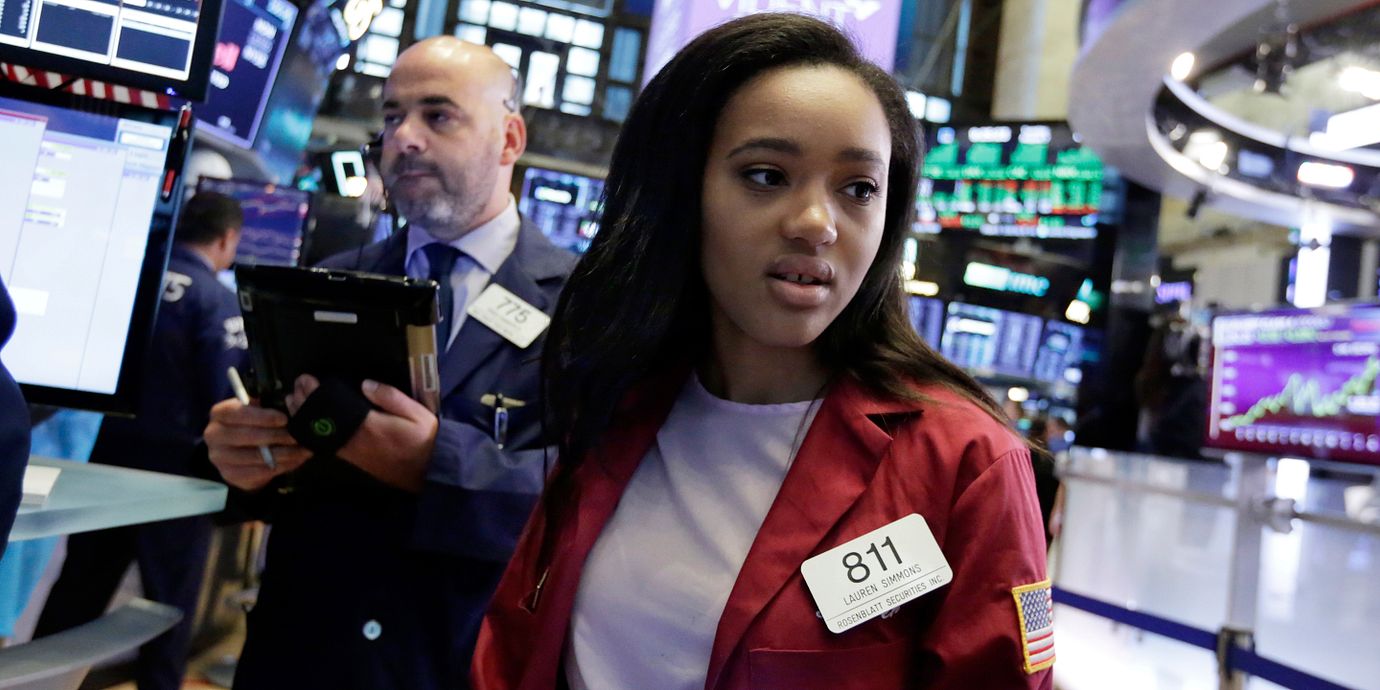
Traders på Wall Street. (Richard Drew / TT / NTB Scanpix)

Tech och Turkiet sänkte Wall Street – ”skräckindex” rusade

New York-börsen backade rejält under onsdagen och ett tag var samtliga stora index ner över 1 procent. Fram mot stängningsdags hade dock de värsta tappen bromsat in och Dow Jones industriindex avslutade dagen på minus 0,5 procent medan S&P 500 stannade på minus 0,8 procent.

Nasdaqs kompositindex pressades hårt och föll 1,2 procent efter att tech-aktier som Facebook, Apple, Netflix och Alphabet handlats lägre. Enligt CNBC drogs de med av kinesiska Tencents svaga rapport som släpptes tidigare under dagen. Tencent rasade 6,6 procent i New York.

Börsoron gav också utslag i det så kallade ”skräckindexet” Vix som rusade under onsdagskvällen över 23 procent till den högsta nivån på över en månad. Market Watch skriver att investerarna fortfarande oroas av det ekonomiskt instabila läget i Turkiet och risken att det spiller över på andra marknader.

New York-börserna i går
Dow Jones: +0,5 %
S&P 500: +0,6%
Nasdaq: –0,3 %

bakgrund
 
Vix-index
Wikipedia (en)
The CBOE Volatility Index, known by its ticker symbol VIX, is a popular measure of the stock market's expectation of volatility implied by S&P 500 index options, calculated and published by the Chicago Board Options Exchange (CBOE). It is colloquially referred to as the fear index or the fear gauge. The formulation of a volatility index, and financial instruments based on such an index, were developed by Menachem Brenner and Dan Galai in 1986. They stated the "volatility index, to be named Sigma Index, would be updated frequently and used as the underlying asset for futures and options. ... A volatility index would play the same role as the market index play for options and futures on the index." In 1986, Brenner and Galai proposed the creation of a series of volatility indices, beginning with an index on stock market volatility, and moving to interest rate and foreign exchange rate volatility to the American Stock Exchange. In 1987, Brenner and Galai met with Joseph Levine and Deborah Clayworth at the CBOE to propose various structures for a tradeable index on volatility; those discussions continued until 1991. The current VIX concept formulates a theoretical expectation of stock market volatility in the near future. The current VIX index value quotes the expected annualized change in the S&P 500 index over the following 30 days, as computed from options-based theory and current options-market data.The CBOE retained consultant Robert Whaley in 1992 to develop a tradable volatility instrument based on index option prices. Based on historical index option prices, Whaley computed a data series of retrospective daily VIX levels from January 1986 onward. CBOE began publish real-time VIX data in 1993.

Börstjänster

Nyheter och analys

Kalender

Omni är politiskt obundna och oberoende. Vi strävar efter att ge fler perspektiv på nyheterna. Har du frågor eller synpunkter kring vår rapportering? Kontakta redaktionen