Ukrainas elnät under attack inför femte krigsvintern
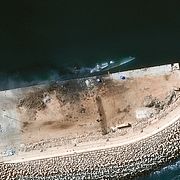
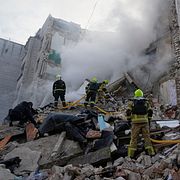
Även i natt attackerade Ryssland civil infrastruktur i Ukraina. I natt fokuserades attackerna till Zjytomyrska i de nordvästra delarna av landet. Det rapporterar Kyiv Independent.
Nio personer, varav två barn, skadades i attackerna men siffrorna kan komma att stiga under dagen.
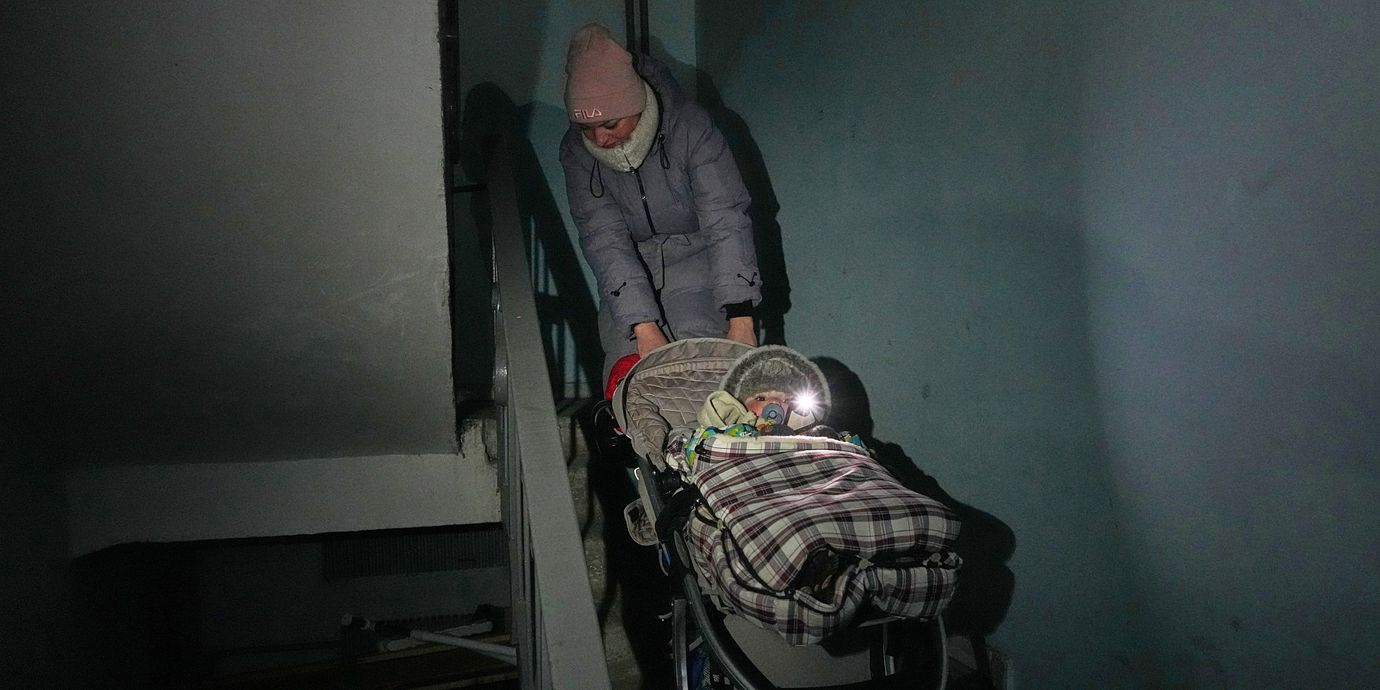
Omkring 200 000 människor bor i Zjytomyrska och de senaste veckorna har Ryssland attackerat regionens energinät. Under krigets fyra vintrar har Ryssland återkommande riktat attacker mot Ukrainas energinät, vilket har lämnat civila utan värme i vinterkylan. Taktiken ser ut att fortsätta inför krigets femte vinter.
Att attackera civil infrastruktur på det här sättet kan utgöra ett krigsbrott.
bakgrund
Rysslands attacker mot civila
Wikipedia (en)
During the Russo-Ukrainian War (2022–present), the Russian military has continuously carried out deliberate attacks against civilian targets and indiscriminate attacks in densely populated areas. The United Nations Human Rights Monitoring Mission in Ukraine says the Russian military exposed the civilian population to unnecessary and disproportionate harm by using cluster bombs and by firing other weapons with wide-area effects into civilian areas, such as missiles, heavy artillery shells, and multiple launch rockets. As of 2026, the attacks had resulted in between the UN-documented 17,000 and an estimated 40,000 dead civilians. On 22 April 2022, the UN reported that of the 2,343 civilian casualties it had been able to document, it could confirm 92.3% of these deaths were as a result of the actions of the Russian armed forces.
On 5 July 2022, the UN High Commissioner for Human Rights (OHCHR), Michelle Bachelet, reported that most civilian casualties documented by her office had been caused by the Russian army's use of explosive weapons with wide-area effects in populated areas, calling it "indisputable." By 30 June 2023, OHCHR assessed that 90.5% of all civilian deaths were caused by such indiscriminate attacks and that 84.2% of them were recorded in Ukrainian-held territory. El País estimated that by March 2023 Russian forces were firing at a rate of between 600,000 and 1.8 million shells per month. By February 2024, Russia had fired between 12 and 17 million artillery shells against Ukraine. By the end of 2023, Russian forces launched about 7,400 missiles and 3,900 Shahed drone strikes against Ukraine, according to Ukrainian military officials. Reports on the use of cluster bombs raised concerns about the high number of civilian casualties and the long-lasting danger of unexploded ordnance. According to the OHCHR, cluster bombs have been used by Russian armed forces and pro-Russian separatists in densely populated areas, resulting in civilian casualties.
The deadliest Russian attacks on civilians during the war have been the Mariupol theatre airstrike and the Bucha massacre, which are estimated to have killed hundreds. Other strikes on civilians with high casualties include the April 2022 Kramatorsk railway station attack (which killed 63); 3 March 2022 Chernihiv bombing (which killed 47); the July 2022 Chasiv Yar missile strike (which killed 46), the Zaporizhzhia civilian convoy attack (which killed 32), the 2023 Dnipro residential building airstrike (which killed 46), the 2023 Hroza missile attack (which killed 59), and the 2025 Sumy airstrike (which killed 35 people).
In total, Russia has attacked more than 3,000 health care targets, more than 4000 schools and universities, more than 2.5 million housing units, more than 700 churches.
Omni är politiskt obundna och oberoende. Vi strävar efter att ge fler perspektiv på nyheterna. Har du frågor eller synpunkter kring vår rapportering? Kontakta redaktionen