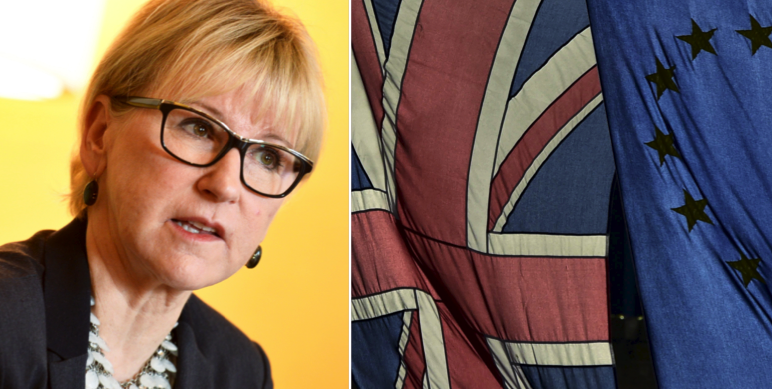
Wallström varnar i BBC-intervju: EU kan upplösas
Sveriges utrikesminister Margot Wallström (S) varnar i en intervju med brittiska BBC för att ett utträde ur EU kan leda till unionens sammanbrott.
Det som oroar henne är en dominoeffekt.
– Det kan få andra EU-medlemsstater att säga: ”Om de kan, så kanske vi också borde ha folkomröstningar och kanske ska vi också lämna”.
Britterna ska folkomrösta om EU-medlemskapet den 23 juni och en ny opinionsundersökning som publicerades i The Independent på fredagskvällen ger lägret som vill lämna unionen ett försprång på tio procentenheter.
bakgrund
EU-folkomröstningen i Storbritannien den 23 juni
Wikipedia (en)
The United Kingdom European Union membership referendum, also known as the EU referendum within the United Kingdom, is a referendum that is scheduled to take place in the United Kingdom and Gibraltar on 23 June 2016. Membership of the European Union has been a topic of debate in the United Kingdom since before the country joined the European Economic Community (EEC, or the "Common Market"), as it was known then, in 1973.
In accordance with a Conservative Party manifesto commitment, the legal basis for a referendum was established by the passage of the European Union Referendum Act 2015 by the UK Parliament. It will be the second time the British electorate has been asked to vote on the issue of European Union membership; the first was held in 1975, on EEC membership. Continued membership was approved in that referendum by 67% of voters, but the nature of the EU has changed substantially since then and the result of this referendum is expected to be significantly closer.
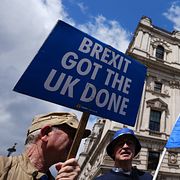
Those who favour a British withdrawal from the European Union – commonly referred to as a Brexit (a portmanteau of British and exit) – argue that being a member undermines national parliamentary sovereignty, while some in favour of membership argue that in a world with many levels of supranational organisations any theoretical loss of sovereignty is more than compensated by the benefits of membership of the EU. Those who want to leave the EU argue that it would: allow the UK to better control immigration, thus reducing pressure on public services, housing and jobs; save billions in EU membership fees; allow the UK to make its own trade deals; and free the UK from EU regulations and bureaucracy that they see as needless and costly. Those who want to remain argue that leaving the EU would: risk the UK's prosperity; diminish its influence over world affairs; jeopardise national security by reducing access to common European criminal databases; and result in trade barriers between the UK and the EU. In particular, they argue that leaving the EU would lead to job losses, delays in investment coming to the UK and risks to large and small business.
Omni är politiskt obundna och oberoende. Vi strävar efter att ge fler perspektiv på nyheterna. Har du frågor eller synpunkter kring vår rapportering? Kontakta redaktionen