Polen och Litauen tar fram evakueringsplan
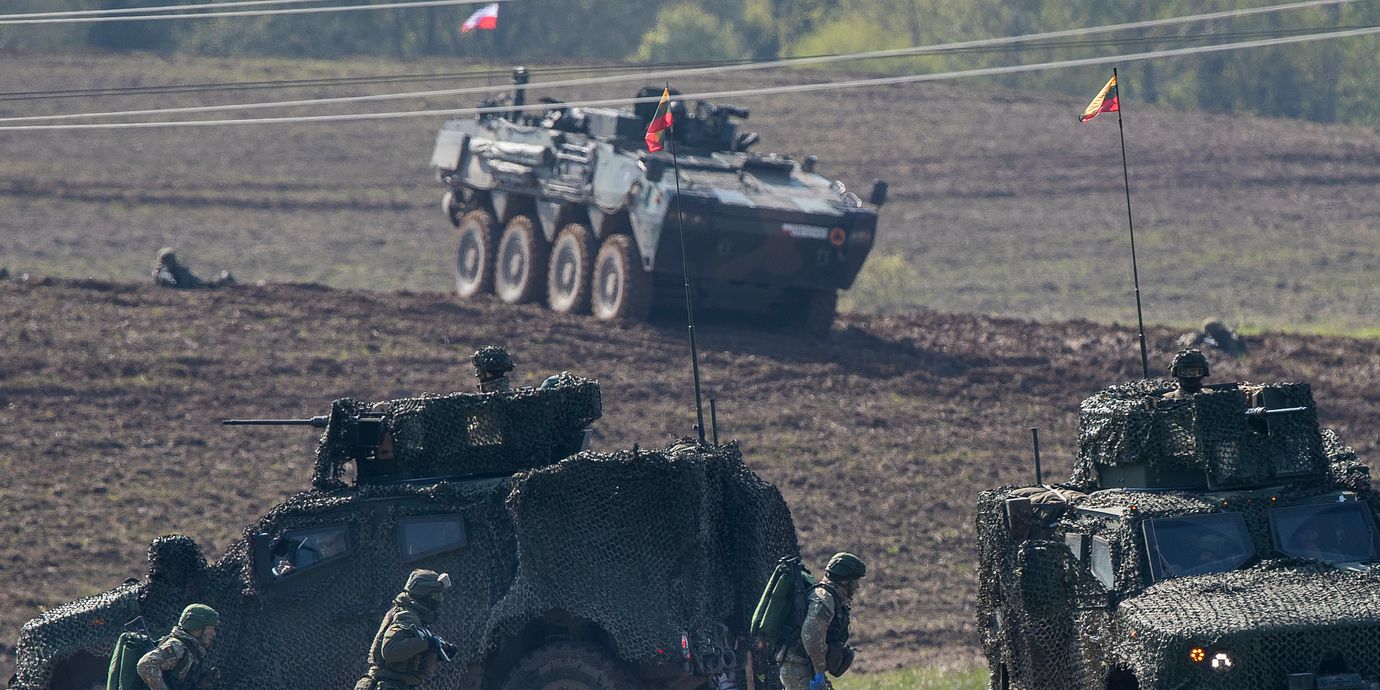
Polen och Litauen jobbar på en gemensam plan för att evakuera de tre baltstaternas invånare i händelse av en stor kris eller militärt hot, rapporterar Euronews.
De två länderna delar en 6,5 mil lång gräns kallad Suwalkikorridoren. Öster om den gränsar de till Belarus, och i väst till den ryska exklaven Kaliningrad.
– Suwalkikorridoren är av enorm vikt, både militärt och logistiskt, säger Vilmantas Vitkauskas, chef för Litauens krismyndighet.
bakgrund
Suwalkikorridoren
Wikipedia (en)
The Suwałki Gap, also known as the Suwałki corridor ([suˈvawkʲi] ), is a sparsely populated area around the border between Lithuania and Poland, and centres on the shortest path between Belarus and the Russian exclave of Kaliningrad Oblast on the Polish side of the border. Named after the Polish town of Suwałki, this choke point has become of great strategic and military importance since Poland and the Baltic states joined the North Atlantic Treaty Organization (NATO).
The border between Poland and Lithuania in the area of the Suwałki Gap was formed after the Suwałki Agreement of 1920, but it carried little importance in the interwar period as at the time, the Polish lands stretched farther northeast. During the Cold War, Lithuania was part of the Soviet Union and communist Poland was a member of the Soviet-led Warsaw Pact alliance. The dissolution of the Soviet Union and the Warsaw Pact hardened borders that cut through the shortest land route between Kaliningrad (Russian territory isolated from the mainland) and Belarus, Russia's ally.
As the Baltic states and Poland eventually joined NATO, this narrow border stretch between Poland and Lithuania became a vulnerability for the military bloc because, if a hypothetical military conflict were to erupt between Russia and Belarus on one side and NATO on the other, capturing the 65 km (40 mi)-long strip of land between Russia's Kaliningrad Oblast and Belarus would likely jeopardise NATO's attempts to defend the Baltic states, because it would cut off the only land route there. NATO's fears about the Suwałki Gap intensified after 2014, when Russia annexed Crimea and launched the war in Donbas, and further increased after Russia started a full-scale invasion of Ukraine in February 2022. These worries prompted the alliance to increase its military presence in the area, and an arms race was triggered by these events.
Both Russia and the European Union countries also saw great interest in civilian uses of the gap. In the 1990s and early 2000s, Russia attempted to negotiate an extraterritorial corridor to connect its exclave of Kaliningrad Oblast with Grodno in Belarus. Poland, Lithuania and the EU did not consent. Movement of goods through the gap was disrupted in summer 2022, during the Russian invasion of Ukraine, as Lithuania and the European Union introduced transit restrictions on Russian vehicles as part of their sanctions. The Via Baltica road, a vital sea and road link connecting Finland and the Baltic states with the rest of the European Union, passes through the area. The expressway connection from the Polish side, the new S61 expressway, while the A5 highway in Lithuania is being upgraded to a divided highway. The Rail Baltica route near the Suwałki Gap is under construction.
Omni är politiskt obundna och oberoende. Vi strävar efter att ge fler perspektiv på nyheterna. Har du frågor eller synpunkter kring vår rapportering? Kontakta redaktionen