bakgrund
Offshore wind power
Wikipedia (en)
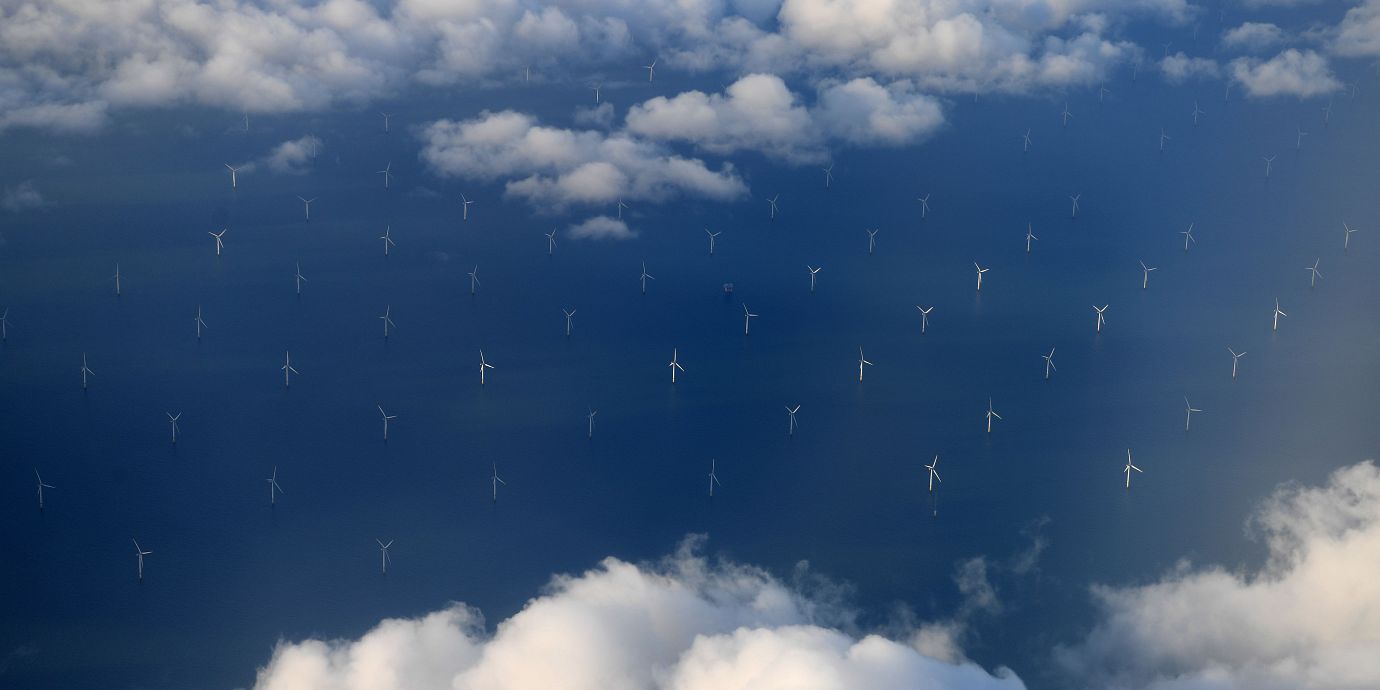
Offshore wind power or offshore wind energy is the use of wind farms constructed in bodies of water, usually in the ocean, to harvest wind energy to generate electricity. Higher wind speeds are available offshore compared to on land, so offshore wind power’s electricity generation is higher per amount of capacity installed, and NIMBY opposition to construction is usually much weaker.
Unlike the typical use of the term "offshore" in the marine industry, offshore wind power includes inshore water areas such as lakes, fjords and sheltered coastal areas as well as deeper-water areas. Most offshore wind farms employ fixed-foundation wind turbines in relatively shallow water. As of 2020, floating wind turbines for deeper waters are in the early phase of development and deployment.
At the end of 2020, the total worldwide offshore wind power capacity was 35.3 gigawatt (GW). United Kingdom (29%), China (28%) and Germany (22%) account for more than 75% of the global installed capacity. As of 2020, the 1.2 GW Hornsea Project One in the United Kingdom is the largest offshore wind farm in the world. Other projects are in the planning stage, including Dogger Bank in the United Kingdom at 4.8 GW, and Greater Changhua in Taiwan at 2.4 GW.The cost of offshore wind power has historically been higher than that of onshore wind generation, but costs have been decreasing rapidly in recent years to $78/MWh in 2019. Offshore wind power in Europe has been price-competitive with conventional power sources since 2017. Offshore wind generation grew at over 30 percent per year in the 2010s. As of 2020, offshore wind power has become a significant part of northern Europe power generation, though it remained less than 1 percent of overall world electricity generation.